Do you remember the days when scoring 30 points was a winning score in the NRL, with one or two times per year when it wouldn't be?
You know the games.
The ones where defence went out the back window and points were being scored for fun. And they were just that. Fun.
But in a round of eight games, and a season of 200 games give or take, there were far more wars of attrition than there weren't.
Points per game have been slowly creeping up in recent seasons, and that of course is by design with the invent of the six-again rule.
It has certainly had its good moments, but it has gone a long, long way in the opposite direction this year. To the point we have had an 80-point game in each of the last two rounds.
First, there was the North Queensland Cowboys getting the better of the Cronulla Sharks in Townsville 48-36, and then the rather roller-coaster style game which saw the South Sydney Rabbitohs come up short against the Newcastle Knights 42-38 over the weekend.
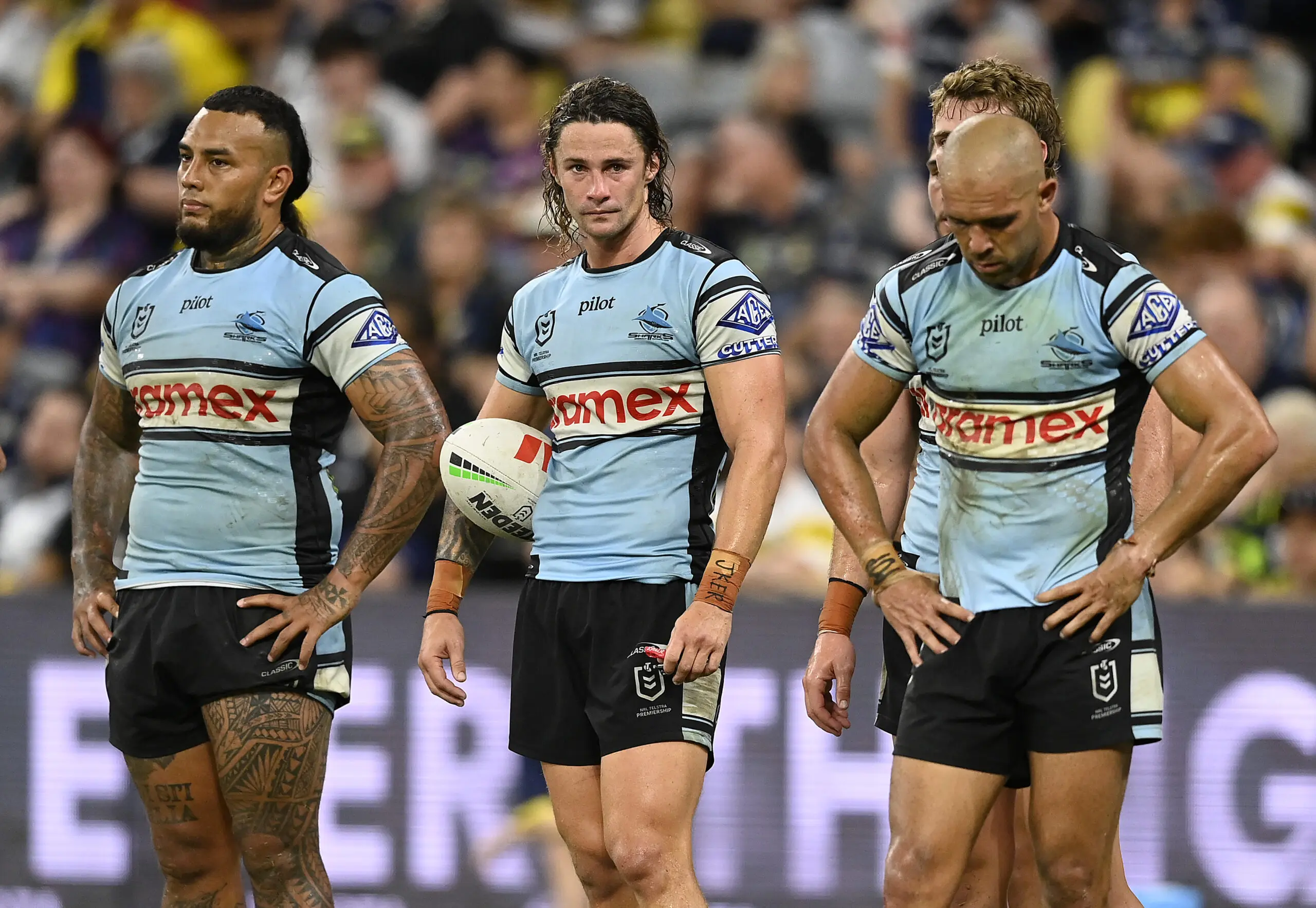
The six-again rule is not the only reason for points being scored for fun. There were only four of them in that game in Newcastle over the weekend, but it's clear the pace of the game, the advent of the rules and the way things are being policed has turned defence into a dying art form.
Faster, more agile players is now the push more than it ever has been, and it appears far less time than ever before is being spent on defence.
Some of the tackle attempts in games this year have been essentially what would have been dished up in the old National Youth Competition where scores the likes of what we are seeing in the NRL were the norm rather than the novelty.
It would be hard to say the elite competition in this country has never been that way.
There was a period at the turn of the century - between 2001 and 2005 in particular - where points were scored far more than they were in the following 15 years. 2006 brought us the only 100-point game in the sport's history at the elite level.
That year also saw an 8-1 scoreline though - something that, it could be pretty confidently guessed won't be repeated this year.
In total, games are running at 45.83 per cent over 50 points this year. That is the second highest in competition history, with only 2004 dishing up a higher figure at 48.15 per cent.
When it comes to games over 60 and 70 points though, new records are being set this year, while the two 80-point or more games already equals the number that have been scored in each of the last two years.
Even in the early 2000s, the most ever recorded in a season was four. 2026 hasn't even reached the typically highest scoring part of the season yet and has seen two in back-to-back weeks, while another five have crossed the 70-point barrier.
Almost one in ten games is seeing over 70 points - a figure that has never really been close before.
Games with 50 or more points scored since 1998
| Year | 50+ Games | 50+ % | 60+ Games | 60+ % | 70+ Games | 70+% | 80+ Games | 80+ % |
|---|---|---|---|---|---|---|---|---|
| 1998 | 66 | 26.09% | 23 | 9.09% | 5 | 1.98% | 0 | 0.00% |
| 1999 | 51 | 23.94% | 18 | 8.45% | 7 | 3.29% | 2 | 0.94% |
| 2000 | 63 | 32.98% | 18 | 9.42% | 2 | 1.05% | 1 | 0.52% |
| 2001 | 84 | 43.98% | 47 | 24.61% | 15 | 7.85% | 3 | 1.57% |
| 2002 | 83 | 43.92% | 43 | 22.75% | 13 | 6.88% | 1 | 0.53% |
| 2003 | 84 | 44.44% | 37 | 19.58% | 13 | 6.88% | 3 | 1.59% |
| 2004 | 91 | 48.15% | 41 | 21.69% | 9 | 4.76% | 4 | 2.12% |
| 2005 | 82 | 43.39% | 32 | 16.93% | 10 | 5.29% | 0 | 0.00% |
| 2006 | 57 | 30.16% | 20 | 10.58% | 4 | 2.12% | 1 | 0.53% |
| 2007 | 54 | 26.87% | 21 | 10.45% | 7 | 3.48% | 2 | 1.00% |
| 2008 | 56 | 27.86% | 21 | 10.45% | 4 | 1.99% | 2 | 1.00% |
| 2009 | 52 | 25.87% | 18 | 8.96% | 4 | 1.99% | 1 | 0.50% |
| 2010 | 55 | 27.36% | 27 | 13.43% | 7 | 3.48% | 0 | 0.00% |
| 2011 | 39 | 19.40% | 15 | 7.46% | 1 | 0.50% | 0 | 0.00% |
| 2012 | 51 | 25.37% | 19 | 9.45% | 4 | 1.99% | 0 | 0.00% |
| 2013 | 38 | 18.91% | 12 | 5.97% | 5 | 2.49% | 0 | 0.00% |
| 2014 | 54 | 26.87% | 16 | 7.96% | 3 | 1.49% | 0 | 0.00% |
| 2015 | 51 | 25.37% | 16 | 7.96% | 3 | 1.49% | 0 | 0.00% |
| 2016 | 52 | 25.87% | 13 | 6.47% | 2 | 1.00% | 0 | 0.00% |
| 2017 | 47 | 23.38% | 7 | 3.48% | 5 | 2.49% | 1 | 0.50% |
| 2018 | 51 | 25.37% | 18 | 8.96% | 4 | 1.99% | 2 | 1.00% |
| 2019 | 35 | 17.41% | 8 | 3.98% | 1 | 0.50% | 0 | 0.00% |
| 2020 | 52 | 30.77% | 19 | 11.24% | 4 | 2.37% | 1 | 0.59% |
| 2021 | 80 | 39.80% | 33 | 16.42% | 8 | 3.98% | 3 | 1.49% |
| 2022 | 59 | 29.35% | 21 | 10.45% | 5 | 2.49% | 2 | 1.00% |
| 2023 | 79 | 37.09% | 33 | 15.49% | 6 | 2.82% | 1 | 0.47% |
| 2024 | 83 | 38.97% | 40 | 18.78% | 14 | 6.57% | 2 | 0.94% |
| 2025 | 81 | 38.03% | 42 | 19.72% | 13 | 6.10% | 2 | 0.94% |
| 2026 | 33 | 45.83% | 19 | 26.39% | 7 | 9.72% | 2 | 2.78% |
The other concern for state of the game, blowouts aside, is that points generally increase during the second half of the season. Blowouts around the Origin period and as injuries - which are again plentiful this year - mount, there will be more and more games with less competitive scores.
You only need to look at the AI momentum tracker employed by Fox Sports on broadcasts this year to understand that once a team gains the ascendency, it's very difficult indeed for the opposition to get it back.
In every single season since 2019, points per game have climbed during the second half of the year, while margins, which are already as high as they have been since the early 2000s, either stay stable or climb.
Average Points per Game - Round 8 vs End of Season
| Year | Round 8 | End of Season | Difference |
|---|---|---|---|
| 2019 | 38.58 | 39.52 | 0.94 |
| 2020 | 38.47 | 41.69 | 3.22 |
| 2021 | 41.58 | 46.01 | 4.43 |
| 2022 | 38.89 | 43.18 | 4.29 |
| 2023 | 43.06 | 45.35 | 2.29 |
| 2024 | 43.75 | 46.73 | 2.98 |
| 2025 | 45.67 | 46.32 | 0.65 |
| 2026 | 50.52 | TBC | TBC |
Average Margin per Game - Round 8 vs End of Season
| Year | Round 8 | End of Season | Difference |
|---|---|---|---|
| 2019 | 13.52 | 13.53 | 0.01 |
| 2020 | 14.84 | 15.36 | 0.52 |
| 2021 | 17.45 | 18.27 | 0.82 |
| 2022 | 14.45 | 16.28 | 1.82 |
| 2023 | 10.38 | 14.81 | 4.44 |
| 2024 | 15.00 | 14.62 | -0.38 |
| 2025 | 15.14 | 15.12 | -0.02 |
| 2026 | 17.52 | TBC | TBC |
The period of points freeing flowly in the early 2000s was down to a lack of competitiveness and a free-flowing style being played.
The material shift in the game this year to having players who can attack with defence an afterthought will put questions on the sustainability of the game moving forward.
Recruitment is going to be focused on athletes rather than rugby league hard men who have had a place in this sport for more than a hundred years, and coaching will adapt too.
Already we are seeing traditional defensive styles essentially be non-effective this year.
You only need to look at worked for teams like the Canterbury Bulldogs and Melbourne Storm last year against what they are doing this year to understand you need to move with the times on that end of the park, or you will be left behind.
Intriguingly, six-agains have continued to fall in recent weeks after reaching a peak of 12 per game in Round 2, but points have continued to increase, and it's down to tactics, fatigue and a shift in focus and attitude.
The NRL did bring out stats just last week suggesting the ball is spending less time in play this year, although with points increasing, that is hardly to the surprise of anyone.
There is a very real chance that this is going to be the first year we see more than 50 points per game in the NRL era, but when you consider the year before the six-again was the lowest at just 39.33 points per game, the shift in what rugby league looks work during a period of just seven years has been astronomical.
For those who want to be entertained, it works.
But for rugby league purists, and those who want more than a game of basketball each week to look forward to, the concept of more than 60 points in over a quarter of games played is wearing thin already.
Even with reduced six-agains, the horse has bolted on team selection, on ball in play time and on the way the game will look going forward.
You can only hope a middle ground is found and it's sustainable in the long-term.