


Twelve months ago, the Canterbury-Bankstown Bulldogs were one of the best teams in the competition.
They were disciplined, relentless and capable of turning games into ugly, gritty contests that suited them perfectly.
Every player knew their role, and under Cameron Ciraldo, the club looked like it had finally found a clear identity.
Now, the problems surrounding the Bulldogs feel very different.
Following Canterbury's 44-12 loss to the Dolphins, Ciraldo made it clear in his post-match press conference that he believed officiating had played a big role in the result.
“There are things that we can control on that, but I watch the game, and I don't see us being that much more ill-disciplined than the opposition,” Ciraldo said.
“Sometimes I just can't understand where those penalties come from, but there are ones where we are totally in control of, but I feel like there are ones where we're just an easy target at the moment.
“So that's one. Every time we have a chance to apply pressure, and we're playing that field position game, we just don't get rewarded for it.
“Whether someone lays down and holds their neck or whatever, we just find ourselves defending our try line again.”

There is some truth to the frustration.
This season has been filled with debate around inconsistent officiating, six-again calls and the overall flow of games.
Momentum swings can completely change a match, and repeated penalties can mentally drain a side.
But in this case, the statistics paint a very different picture.
The Bulldogs actually conceded fewer penalties than the Dolphins, eight compared to ten.
Both sides also had a player sin-binned.
In the opening half, the set restart count was almost identical, with the Dolphins receiving four compared to Canterbury's three.
Even in the second half, when the Dolphins received two set restarts, and the Bulldogs received none, it still does not explain a second-half collapse where the scoreline exploded from 14-12 to 44-12.
What explains it far better is Canterbury's inability to execute under pressure.
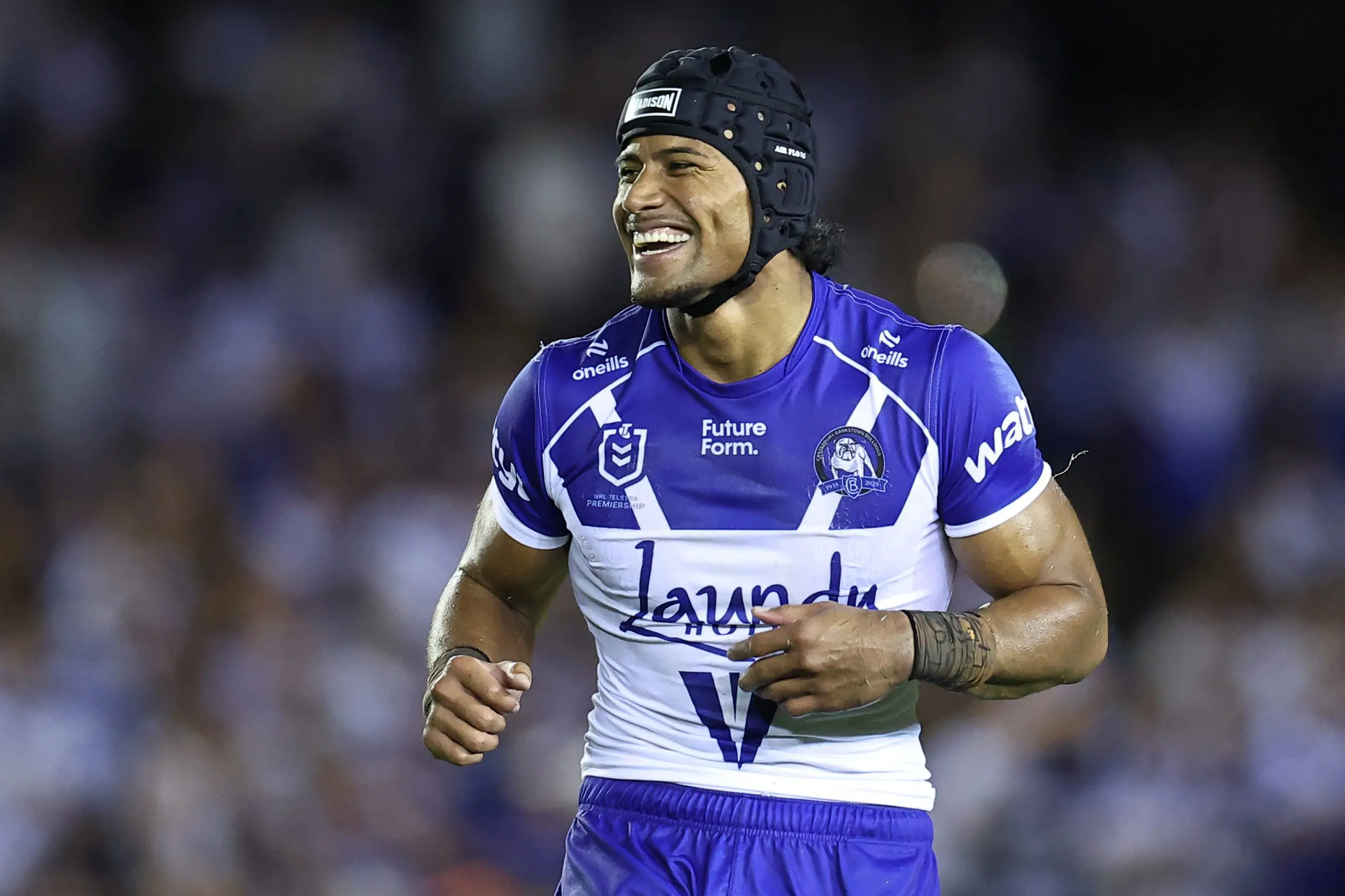
The Bulldogs missed 40 tackles across the game. Connor Tracey missed five. Jonathan Sua missed five. Bronson Xerri and Stephen Crichton missed three each. They also made 10 errors, double the number of the Dolphins.
The second half was even more alarming.
Canterbury had just 38 per cent possession and only 34 per cent territory. They missed 26 tackles in that half alone and committed another three errors, while the Dolphins crossed for five unanswered tries.
That is not the profile of a side beaten by refereeing decisions. That is the profile of a side that lost control of the game entirely.
More concerning is that the performance was not an isolated incident. The Bulldogs' season statistics suggest the same issues have been building for months.
Canterbury has already made 104 errors this season, the sixth most in the competition and only four behind the Parramatta Eels, who have the most overall. Their set completion rate sits at just 78 per cent, consistently preventing them from capitalising on momentum or field position.
Despite Ciraldo suggesting his side has become an “easy target” for penalties, the Bulldogs have conceded 47 penalties this season, the fifth most in the NRL.
More importantly, their past two losses came against the Dolphins and Brisbane Broncos, who are the top two sides for conceding penalties themselves this season.
If Canterbury are being unfairly targeted, then so are the teams beating them.
What makes the Bulldogs frustrating is that there are parts of their game that are genuinely elite. They lead the NRL in charge downs with four. They have produced the most kick return metres in the competition with 1915. They sit fourth for total runs with 1678 and have amassed 15,760 running metres overall.
The effort areas are there. The work rate is there. The opportunities are there.
The problem is what happens after that.
The Bulldogs have only scored 157 points all season and crossed for just 26 tries, the second fewest in the competition. For a team generating that much yardage and field position, those attacking numbers simply do not match.
Which leads to arguably the most alarming statistic of all.
Across nine games this season, the entire Bulldogs spine combined has managed just six try assists.
Six.
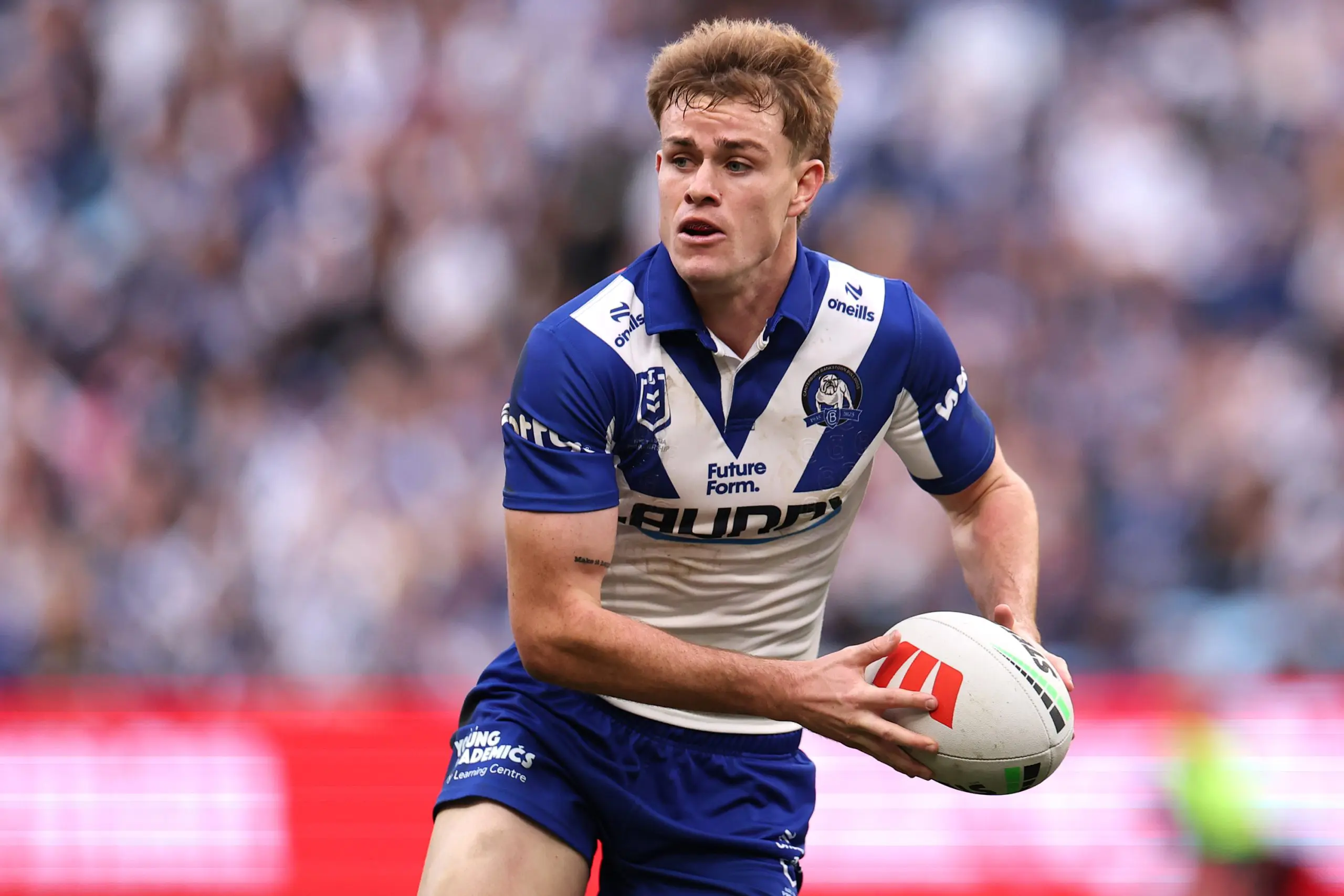
That means the players most responsible for creating points are barely generating any at all.
To put that into perspective, the St George Illawarra Dragons have recorded eight try assists involving spine players, and they are yet to win a game. The ladder-leading Penrith Panthers have produced 21.
Ironically, Penrith's only loss this season came against Canterbury, which only reinforces the frustration around the Bulldogs. The capability is clearly there. They know how to compete with the best teams in the competition.
But unlike last season, where the Bulldogs consistently maximised their opportunities, this year they are wasting them.
That is why the officiating discussion feels secondary.
Yes, poor calls can hurt momentum. Yes, penalties can shift field position and sap confidence from a side already under pressure. But when the opposition is conceding just as many penalties, and still manages to leave you scoreless in the second half while piling on five tries themselves, the statistics become impossible to ignore.
Right now, the Bulldogs are not losing because they are being unfairly treated.
They are losing because they are failing to execute in the moments that matter most.









Every team has calls that go against them, that the coach feels are harsh calls.
Every team has calls that go for them, that the coach (if he is honest) feels are lucky.
That’s EVERY team in EVERY match.
Over the season, for every club, the harsh and the lucky will balance out. The only way they will not is if one or more referees is consciously biased against Canterbury.
So, Mr. Ciraldo needs to understand what he saying if he claims that the referees are responsible for Canterbury’s poor showing this season. He is saying that they are consciously biased against the Dogs (and maybe against the Storm, too ?)
What rubbish !
I think he is lost for an explanation of why his players are not playing as well this season as last.
I think he is worried that Gus will sack him if he does not turn around the performances.
I think Gus needs to tell him to pull his head in, and I think Gus should apologise to the referees, on behalf of the club.
Exactly. He may have noticed that at one point after the first 20 minutes or so, the penalties were something like 6-1 in the Bulldogs favour, with also 2-0 on six against. The Dolphins defended to limit the damage to 12, but also the Bulldogs poor ball control meant that the pressure on the Dolphins was nowhere near what it could have been.
When the pendulum swung, the contrast was massive. The Dolphins went at nearly 100% ball control from that point, the Bulldogs continued to make mistakes, but also lost their discipline.
And the Dolphins took the risks by standing the halves and fullback deeper to play around the Dogs’ compressed defence and trust the skills and speed of their outside back to make it count. It was a well executed strategy, while the Bulldogs continued to rush up in the middle without a thought for what was coming at them.
The Hammer was well contained because his strength is up the middle, but while the Bulldogs were containing his running game, he was merrily assisting Katoa and Nikorima to get to the edges. 6 tries between Isaako, Cobbo and Bostock says it all.
Mate, the refs in the last 2 games have missed clear knock ons and other easy calls that a 3 year old could make. Also Gus should be quiet right now.