Sunday night not only decided the number one nation in world rugby league, it also provided an early indication of who should wear Queensland's No.1 jersey in seven months' time.
Kalyn Ponga and Reece Walsh went head-to-head in the Rugby League World Cup final, with the two superstar fullbacks representing opposing sides in Australia's 32-12 victory over New Zealand.
While the Kangaroos walked away with the ultimate prize, the contest offered Queensland selectors an early opportunity to assess which player should be ahead in the fullback conversation for next year's State of Origin series.
Both have a strong case to be the Maroons' first-choice fullback, with Walsh's explosive attacking game and ability to produce freak moments against Ponga's composure, running game and defensive upside.
However, while Walsh has the ability to make a play that can single-handedly change a game, Ponga has arguably demonstrated more of the qualities required to thrive in the Origin arena, despite being on the losing end of a series and a controversial send-off.
Sunday's final was not necessarily the best advertisement for either player's capabilities, particularly with New Zealand struggling to find any of its rhythm, but when assessing their respective World Cup campaigns, one player has done enough to emerge as the frontrunner.
And that player is Ponga.

The Newcastle Knights captain's introduction to international football was nothing short of remarkable, claiming the Golden Boot after just two appearances before featuring in Sunday's World Cup final.
Across his three appearances, Ponga scored two tries, registered three line breaks and three line-break assists, while averaging 178 running metres per game.
His opening performance against Australia was particularly impressive, despite suffering a broken arm during the 24-22 defeat.
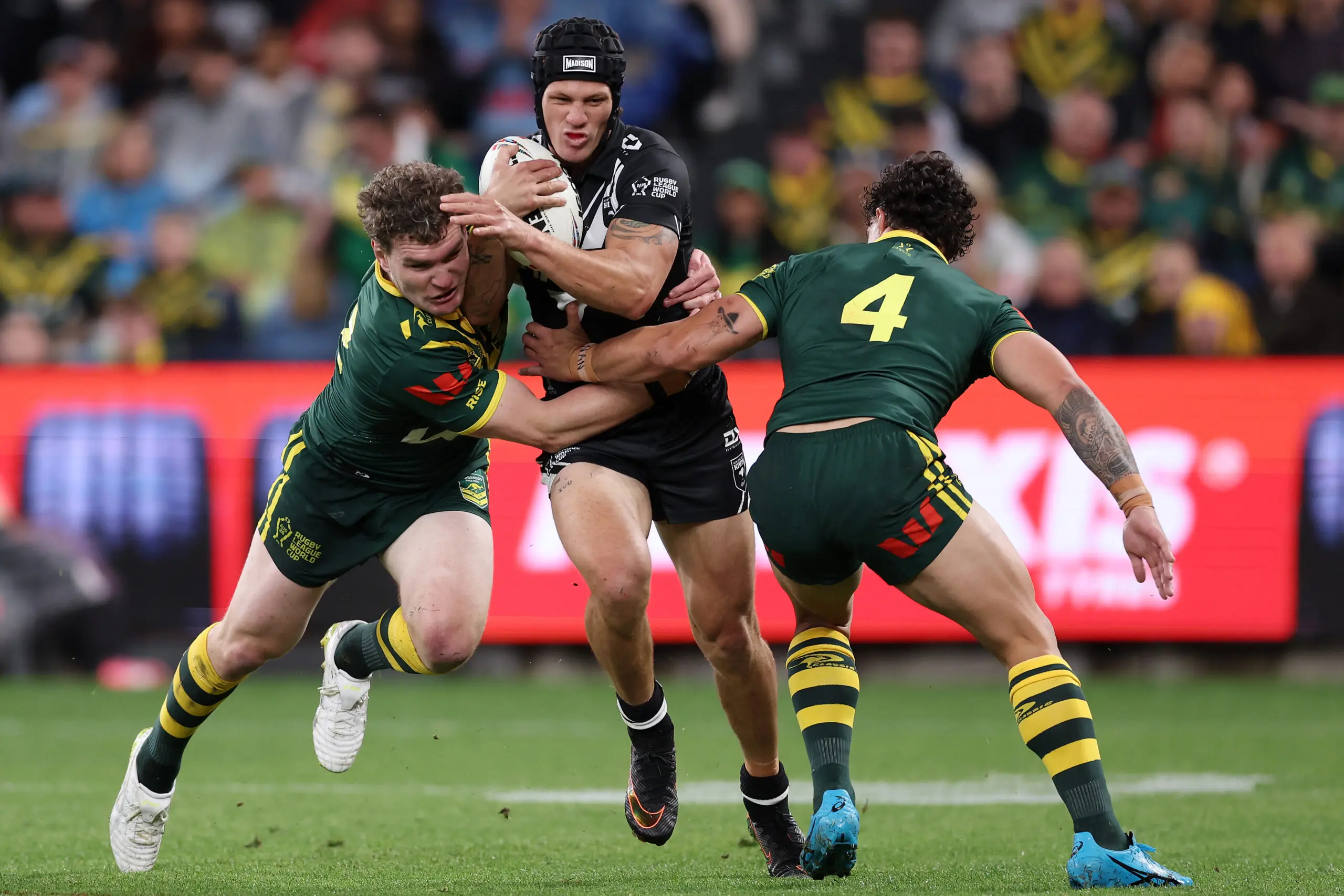
Ponga scored two tries, both coming off line breaks, and finished the contest with just one error and no missed tackles before being forced from the field during the final stages.
Remarkably, he returned just three weeks after undergoing surgery, playing the full 80 minutes against the Kangaroos in his second appearance.
He produced 198 running metres, including 76 kick-return metres and 55 post-contact metres, while also registering three line-break assists and three try assists.
There were four handling errors in that performance, but considering the circumstances surrounding his return, it was hardly enough to overshadow what was an extraordinary individual effort.
His performance in the final was quieter, finishing with 83 running metres, including 18 post-contact metres and 43 kick metres, alongside three tackle breaks.
However, the loss was hardly a reflection of Ponga's individual performance, with the Kiwis struggling to find their own game against an Australian side that looked comfortable throughout the contest.
More importantly, Ponga continued to demonstrate an element of his game that could prove crucial in Origin: security.
His ability to position himself under the high ball, secure possession and generate metres coming out of his own end provides a level of reliability that cannot be overlooked.
Origin matches are often decided by small moments, and giving the opposition additional possession or starting sets on the back foot can quickly change the momentum of a contest.
Ponga offers Queensland a player capable of producing individual brilliance while also providing the stability required to control those moments.
There is little argument against the fact that Walsh can produce some of the most spectacular moments in rugby league.
His acceleration, footwork and ability to create something from seemingly nothing make him one of the most dangerous attacking players in the game.
His World Cup campaign only reinforced those qualities, particularly after earning selection ahead of James Tedesco despite initially being viewed as the former Australian captain's backup.
Against New Zealand in Australia's opening match, Walsh finished with 205 running metres from 16 runs, scored a try and registered a line break.
However, it was also a performance that highlighted the risks that can come with his game.
Walsh recorded three handling errors and conceded two penalties, including one that allowed New Zealand to slot a two-point field goal and establish a four-point lead during the opening stages.
Those costly moments are exactly what Queensland cannot afford to overlook when deciding who should wear the No.1 jersey.
He was again electric against Samoa, scoring three tries in Australia's 44-12 victory while adding two line breaks and a line-break assist.
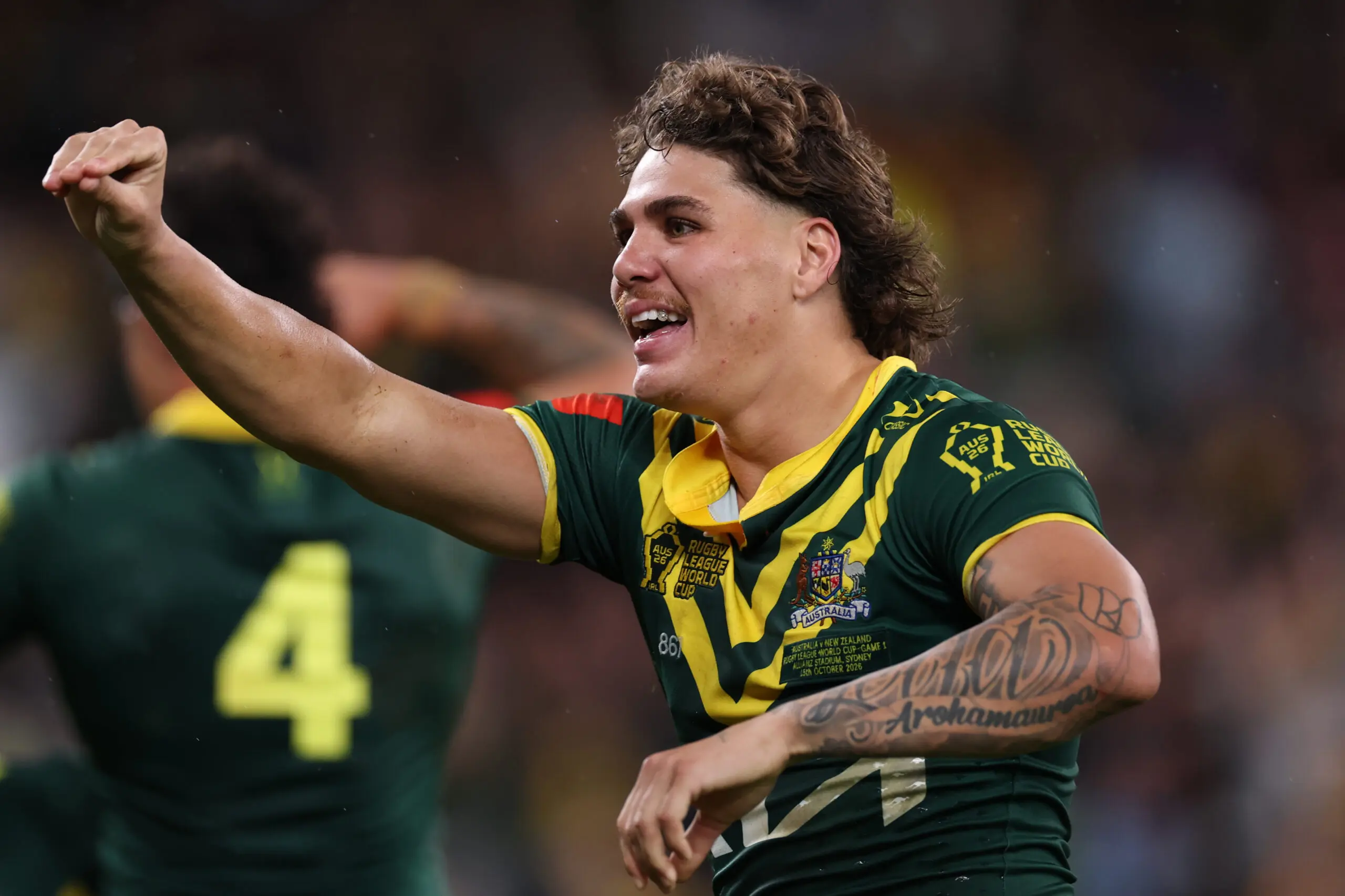
He was arguably the more dangerous attacking fullback in Sunday's final, but it was not his best performance, recording 89 running metres from 11 runs, alongside eight tackle breaks, a line-break assist and a try assist, as well as two handling errors and moments that made you scratch your head.
Walsh's ability to break a game open is arguably unmatched, and there is no denying that Queensland would benefit from having that kind of attacking threat at the back.
However, his attacking brilliance can sometimes come at the expense of the simpler responsibilities expected of an Origin fullback.
There is also the consideration that Ponga's World Cup performances came without the same attacking platform he might receive in a Queensland side.
Walsh, meanwhile, has operated behind an Australian side that has been dominant throughout the tournament, providing him with considerably more opportunities to showcase his attacking ability.
That is not to take anything away from his performances, but it does highlight the importance of considering the different circumstances surrounding both players.
Walsh is arguably better utilised in a hybrid role like we saw this year in Billy Slater's side, keeping him on the sideline and injecting him like some sort of 'cheat code' when they need a burst of brilliance.
His ability to change the momentum of a game could make him an incredibly valuable weapon off the bench, particularly when Origin contests become tight and Queensland need something different in attack.
With seven months still remaining before the next Origin series, plenty can change, but based on what both have shown on the international stage and across the 2026 season as a whole, Ponga deserves to be Queensland's first-choice fullback.