


Coaches will always be judged by wins and losses. That's the nature of professional sport.
But every so often, a season exposes something bigger than the ladder. It challenges long-held ideas about leadership, recruitment and what modern coaching actually looks like.
The 2026 season has done exactly that.
From Brisbane's dramatic fall, to the Tigers' cultural struggles and Manly's coaching change, three lessons have become clearer than ever.
Some coaches are built for representative football, not club football
To be clear, I have enormous respect for Michael Maguire. This isn't an argument that he isn't a good coach.
It's an argument that maybe the modern NRL has changed.
Maguire's intensity has recently produced success everywhere he's gone. He delivered a series win for NSW Blues in 2024, and in his first season at Brisbane, guided the Broncos to a premiership.
Twelve months later, they're watching September from home.
Yes, injuries have played a role. But going from premiers to missing the finals entirely is more than bad luck. Somewhere along the way, Brisbane lost its edge.

Perhaps that's because Maguire's greatest strength is creating urgency.
Representative football is built around short campaigns. Every game is do-or-die, every session carries enormous weight and players know there is no tomorrow. Maguire thrives in that environment.
Club football is different. It's a marathon requiring adaptation across eight months, not eight weeks.
That doesn't make Maguire a poor club coach. It may simply mean his methods are better suited to representative football than the week-to-week grind of the NRL.
Brisbane's recruitment only adds another layer to that conversation.
The Broncos have extended Ben Hunt and recruited proven veterans Dane Gagai and Mitch Barnett. They're players whose professionalism and competitiveness are unquestioned.
But they're also signings designed to win now.
The modern game has never been faster, placing an even greater premium on youth, athleticism and durability. Injuries continue to rise, and with Payne Haas departing, Brisbane arguably need to prioritise the next elite middle forward rather than another experienced campaigner.
Hunt, Barnett and Gagai aren't the foundation of sustained success over five years. They're the type of players you recruit when your window is today.
Whether intentionally or not, that aligns perfectly with a coach whose greatest strengths may lie in shorter-term success.
Coaches aren't there to be mates
The NRL has never been more of a business.
With billion-dollar television deals dominating headlines, it's become impossible to ignore that clubs are businesses first and sporting teams second.
That makes one part of coaching particularly difficult for recently retired players.
Separating friendship from leadership.
Benji Marshall is someone I admire enormously, but this season has highlighted just how hard that transition can be.

As a coach, you're responsible for setting standards and driving culture. Marshall spoke extensively about culture before the season began.
The challenge is maintaining it when you're still navigating whether you're part of the dressing room or leading it.
The Adam Doueihi situation became the clearest example. Whatever the internal reasoning, it appeared to contradict some of the standards Marshall had previously established.
The best coaches make difficult decisions knowing not everyone will like them afterwards.
Respect matters far more than popularity.
That's the balancing act every coach faces: earning players' trust while ensuring they never forget who's making the decisions.
If anything, the Tigers should serve as an early warning for Kieran Foran.
Moving from player to coach in the space of six months leaves very little time to redefine relationships. He can't afford to chase approval if it comes at the expense of accountability.
It's an incredibly difficult transition, and one Marshall is still navigating.
Dean Young also finds himself in a similar position.
His appointment at the Dragons has been met with promising signs. The first few months have been encouraging, with key retention wins, big signings and players already speaking positively about the direction of the club. Earning trust, though, is only the first step.
The real challenge begins once difficult decisions have to be made.
On the other hand, Justin Holbrook has shown how effective that separation can be and how to balance trust and authority.
At the Knights, he's established himself purely as the leader. Newcastle's rise from the wooden spoon in 2025 to finals contention this year reflects a club with clarity, direction and clear authority.
Take accountability
Fans don't expect coaches to have every answer. They just expect them to own the problems.
No club illustrated that better than Manly.
During the Sea Eagles' slide, Anthony Seibold repeatedly resisted taking ownership publicly. After another disappointing performance, he said, "I can't control that narrative, so there's no point wasting my time on it."
When your team is struggling, fans don't want explanations about narratives. They want acknowledgement.
They want to hear, "We need to be better." They want reassurance that the coach sees the same issues they do.
Instead, Seibold's press conference left many supporters feeling disconnected from the club's leadership and direction. Days later, he was gone.
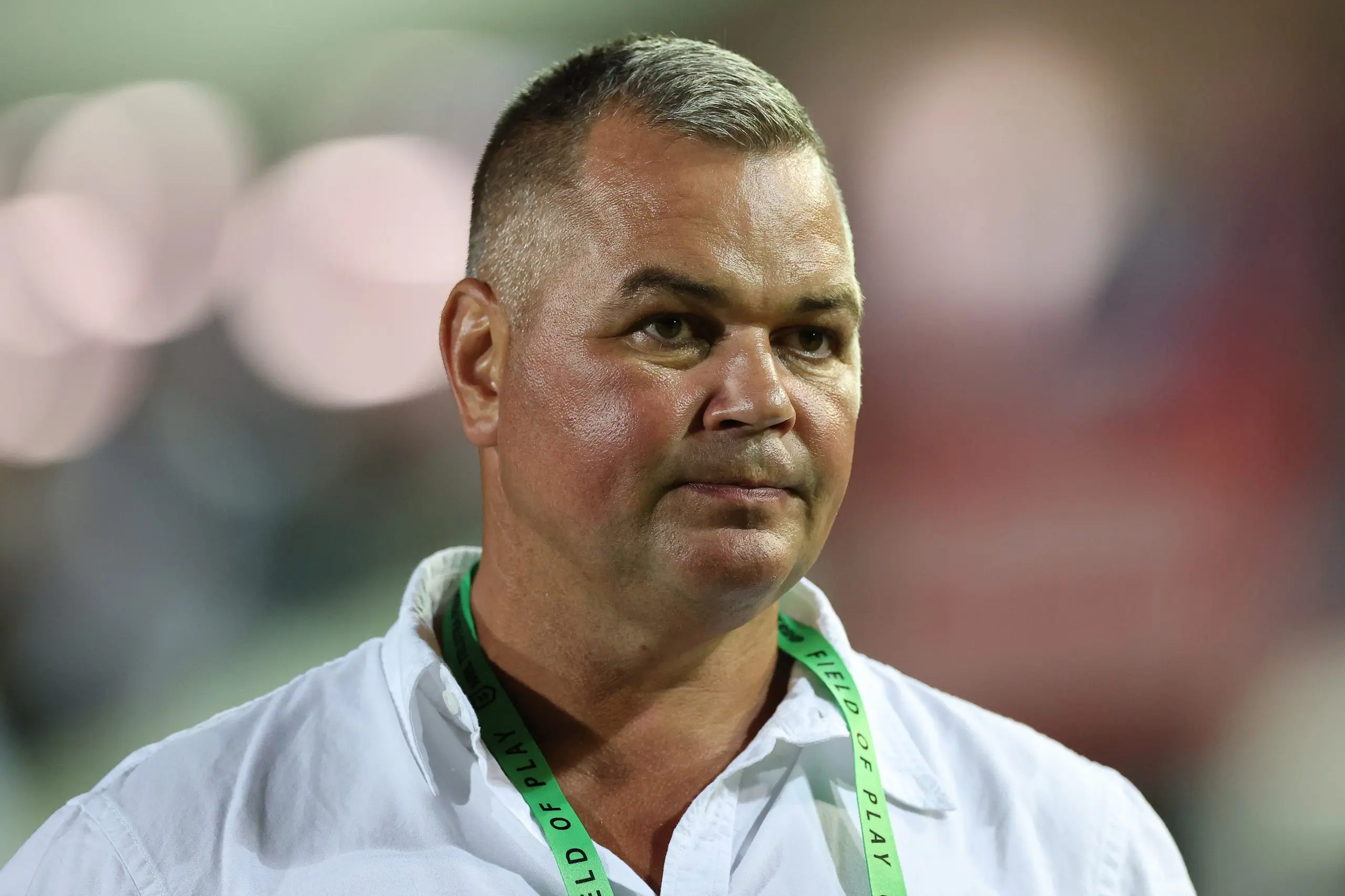
Ironically, his replacement has demonstrated the opposite approach.
Since the early excitement surrounding 'Fozball' has faded and results have become tougher to find, Kieran Foran has consistently fronted the media and accepted responsibility.
Following Manly's fourth straight defeat, he admitted their biggest issue was "self-inflicted."
He identified the problems. He acknowledged them publicly. He promised improvement.
No, that doesn't erase losses. But accountability buys patience. Supporters are remarkably understanding when they believe their coach sees reality the same way they do.
The tactical side of coaching will always dominate discussion. We analyse team selections, interchange rotations, attacking structures and defensive systems every single week.
However, if this season has taught us anything, it's that the modern NRL coach has never been under more pressure to evolve. Whether it's recognising where your strengths lie, making the difficult decisions or fronting the media after defeat, standing still is no longer an option. Adapt, or risk being left behind.










“Some coaches are built for representative football, not club football”
So true. Kevin Walters – the man Madge replaced – was also a decent Origin coach, but one who struggled with the 27 round grind.