The 2026 State of Origin series is done and dusted, with the New South Wales Blues claiming the series victory after a disappointing loss in Game 2 and a dominant performance in the series decider.
Game 3 in Brisbane was career-defining for several players in the Blues side after losing Game 2 in Melbourne, and from start to finish, they were fantastic offensively and defensively.
With all three games behind us, it's now time to reveal Zero Tackle's team of the series.
Players must have started at least one game in a position (including the bench) to be named there.
1. James Tedesco (New South Wales)
Tedesco, despite being remembered in this series for a game-winning try in Game 1, did a lot of work out of the back three with his yardage and ability to break through the line.
Ponga played well in games 1 and 2, but didn't make as big of an impact in the lead the Maroons had in Homebush or the win in Melbourne.
The Blues fullback was subbed off at the end of the first half with a Head Injury Assessment, which he failed.
However, he had strong carries following the back off the foundation the forwards created and played his role well before the unfortunate head clash with Briton Nikora.
The Maroons' starting fullback for the entire series was subbed off in the second half of Game 3, with the Maroons looking most dangerous with Reece Walsh on the field.
Reece Walsh's only game this series was the decider for a short period.
2. Selwyn Cobbo (Queensland)
The Dolphins outside back was one of the best players in this series, and if Queensland had won the series, he would've had a strong argument to win the Wally Lewis Medal.
He scored 5 tries across the three games this series, including a hat-trick in Melbourne, where he was the best player on the field.
When Queensland went to their left edge, he was a huge x-factor for his side, and his carries out of his own end were huge in his side's success.
He was the best winger by a mile in this year's Origin series.
3. Robert Toia (Queensland)
Despite struggling in Game 3, Toia had two really strong games in this series and combined fantastically with teammate Sam Walker in Game 1, torching the Blues' left edge defence.
He also played a role in the fast-paced Maroons attack that the Blues couldn't keep up with in Game 2.
Bradman Best had an excellent game three for the Blues, and his contributions to this series are not dismissed.
However, with Best's one appearance and a Blues backline that needed reshuffles in every facet, it's hard to go past Toia, who played all three games and was, for the most part, one of the better backline players this series.
4. Hamiso Tabuai-Fidow (Queensland)
Always a threat to score a try every time he wears the Maroons jersey, Hamiso Tabuai-Fidow was a highlight in Queensland's surprising series loss.
His speed and footy IQ on the outside torched the Blues all series and played a massive role in getting Cobbo involved for the Maroons.
The 'Hammer' scored a try in every match this series and has scored 14 tries in 13 Origin appearances.
Tabuai-Fidow is four away from tying Greg Inglis for all-time try scorers for Queensland, and he will only be 25 years old in September.
5. Mark Nawaqanitawase (New South Wales)
The creativity and ability to make something out of nothing were pivotal at times when the Blues needed him to come through.
Defensively, he struggled at times, but offensively, he made individual and team plays that kept the scoreboard ticking over, with his one-on-one isolation play against Cobbo in Game 2 and his one-handed pass to Nathan Cleary on the right edge in Game 3 to take the game to a 12-0 lead in the first half.
An aerial threat with his size and mobility made him valuable for the Blues, and he would have been selected in the series opener if it weren't for the injury he sustained a month before the match in Homebush.
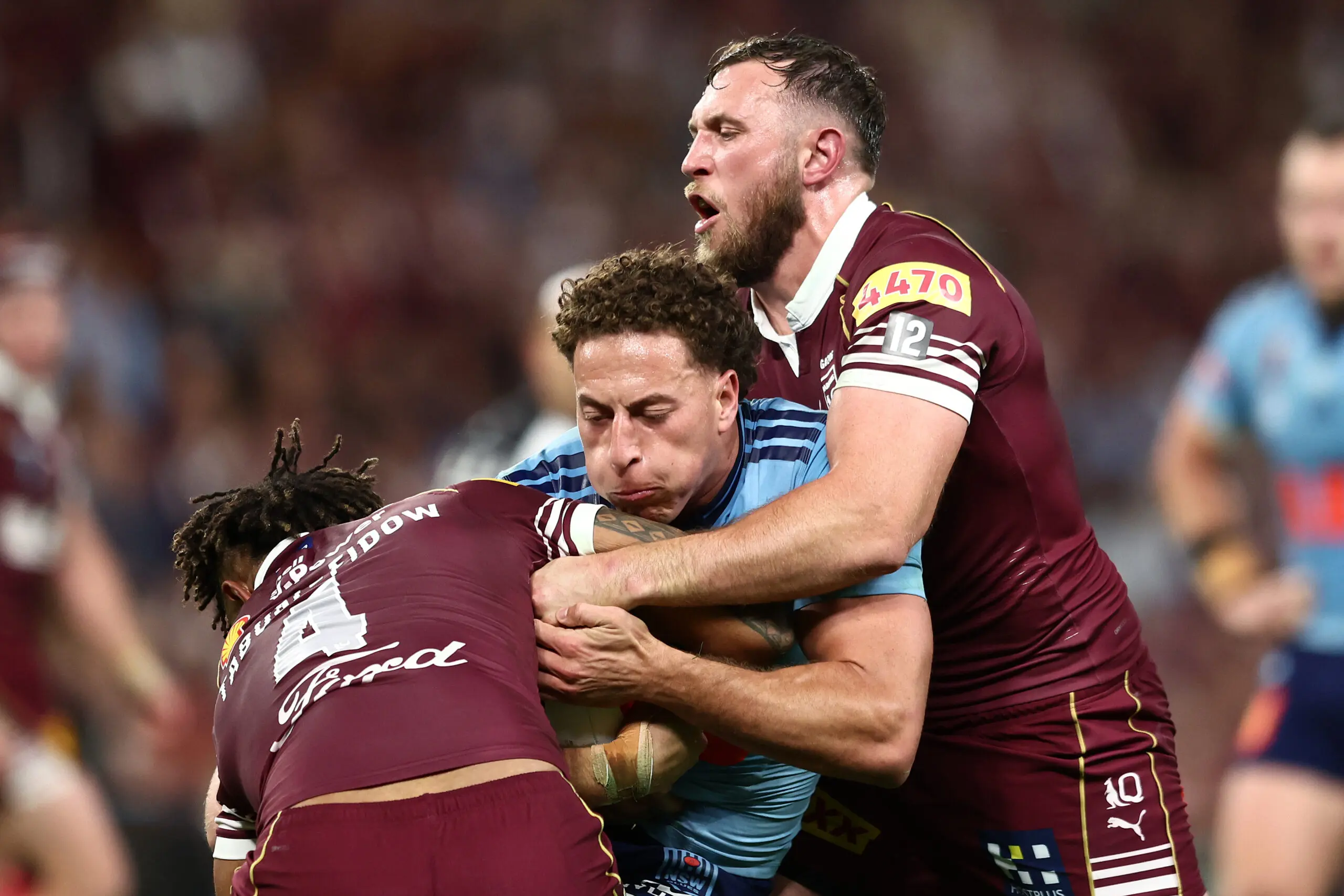
6. Cameron Munster (Queensland)
Munster's craftiness and ability to attack downhill were pivotal in equalising the series in Melbourne.
In Game 1, his combination with Sam Walker and the outside backs led to their 20-0 run.
Munster's lack of a quality performance on Wednesday can't be dismissed, and despite Moses having a massive performance with his boot in Brisbane, his lapses were far more damaging.
Ethan Strange had an incredible Origin debut at five-eighth, but only managed to get on the field in the next two games, playing out of position.
The Maroons' captain's highest of highs in this series were influential and complemented Harry Grant's timing around the ruck, leading to set pieces and completing sets at a high percentage with points that need to be recognised even in a series loss.
7. Nathan Cleary (New South Wales)
Nathan Cleary showed that with role clarity and rising to the occasion, he can perform at an all-time level.
He scored 18 points, tying the record for most points from a player in a single game, and scored the first two tries and 12 points in the game.
The Wally Lewis Medallist also led a historic comeback in Sydney when the Maroons created a 20-0 lead.
Sam Walker had a strong outing in his first two Origin games ever, but the Suncorp decider is a testament to consistency and greatness, which Cleary delivered once again.
The Penrith halfback has now won four series since debuting in Origin at 20 years old, and if he continues playing in the NRL, he can keep building his Origin resume.
8. Payne Haas (New South Wales)
In the front row position, Payne Haas was one of the better performers in his two appearances.
The tactical adjustment of taking his runs on the edge proved significant value in his side setting up their attack.
His physicality and elite conditioning proved a massive asset in the decider, and his performance in Game 2 was underwhelming; however, it was his first game back after recovering from an injury he sustained before Game 1.
9. Harry Grant (Queensland)
Harry Grant had a masterclass performance in Game 2.
Being able to advantage around the ruck and outsmart the markers was the Blues' kryptonite in the first two games.
His game three performance was a different story, as he needed to tackle more in the middle, which took time away from around the ruck.
Reece Robson was outstanding in his role; however, in Game 1, we saw a shift in their attack when Blayke Brailey replaced him, and with Grant's performance in Melbourne, it was really difficult to consider putting the Roosters' dummy half in this spot.
Robson's service from dummy-half on Wednesday night was massive for the timing Moses and Cleary needed.
It was a big improvement from what we saw in the first two games of the series, and the Blues needed his service to get their attack going.
10. Tino Fa'asuamaleaui (Queensland)
With two games of over 100 running metres as a front rower, Tino Fa'asuamaleaui was a significant player in laying the groundwork for the Maroons' success, driving up the field.
Playing Origin in the midst of being with his father for the last time, and seeing him pass away, is not an easy thing to do.
At their best, the Queensland forward pack are flying around with multiple forwards leading the way, and Fa'asuamaleaui, despite struggling to get himself involved in the series decider, shouldn't be the only forward from their pack to blame.
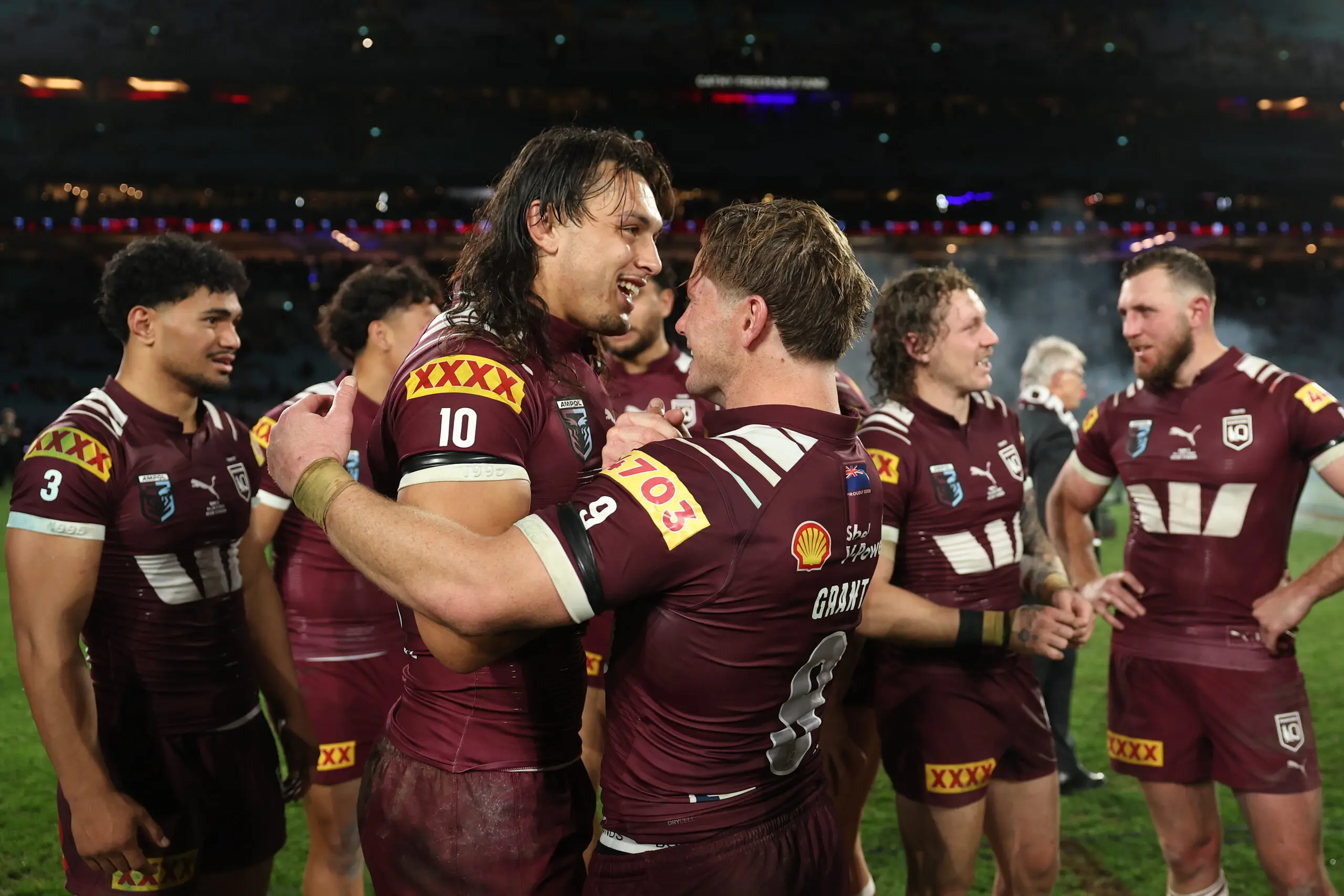
11. Hudson Young (New South Wales)
Hudson Young was the most consistent backrower in this series.
His physicality and defence were noticeable in the three games, and he was able to play away from the ball and inject himself into the game at the right moments.
In Game 1, he scored the first try for New South Wales and led his side in tackles with 44.
On the left edge, Young was a mainstay despite the changes Laurie Daley made and was Origin's best backrower in 2026.
12. Liam Martin (New South Wales)
Liam Martin only played one game in this series, but there's no denying his defence, especially his effort in kick chases.
His offload on Wednesday night led to Nathan Cleary's second try, playing within his combination with his club teammate, and he found a window of opportunity to get the ball into Stephen Crichton's hands.
The Panthers backrower played 80 minutes in the decider and proved why players like him are valuable in Origin.
Haumole Olakau'atu was left out of the second game and only played 67 minutes in Game 1.
Briton Nikora was inconsistent in this series, and Dylan Lucas struggled on the right edge in Game 2.
13. Isaah Yeo (New South Wales)
The Blues captain is one of the most decorated leaders in the game, and despite the calls for Cameron Murray to start in lock, Yeo showed why that spot remained his.
The calls for the reshuffle won't even be to take him off the field, but to instead play in the front row due to his playstyle and Murray's impact in the middle.
Isaah Yeo displayed his ball-playing ability and found his playmakers on either side.
He also showed his consistency in defence and his calculated running game in the series decider.
14. Cameron Murray (New South Wales)
Murray off the bench was genuinely one of the most valuable players in this series outside of Nathan Cleary and Harry Grant's Game 2 performance.
His work in the middle making carries directly at Queensland's line made such a huge difference when the Blues didn't rely on the structured ball-playing strategy that we see from the Panthers at club level.
There was a reason why almost every fan wanted Murray to start at lock.
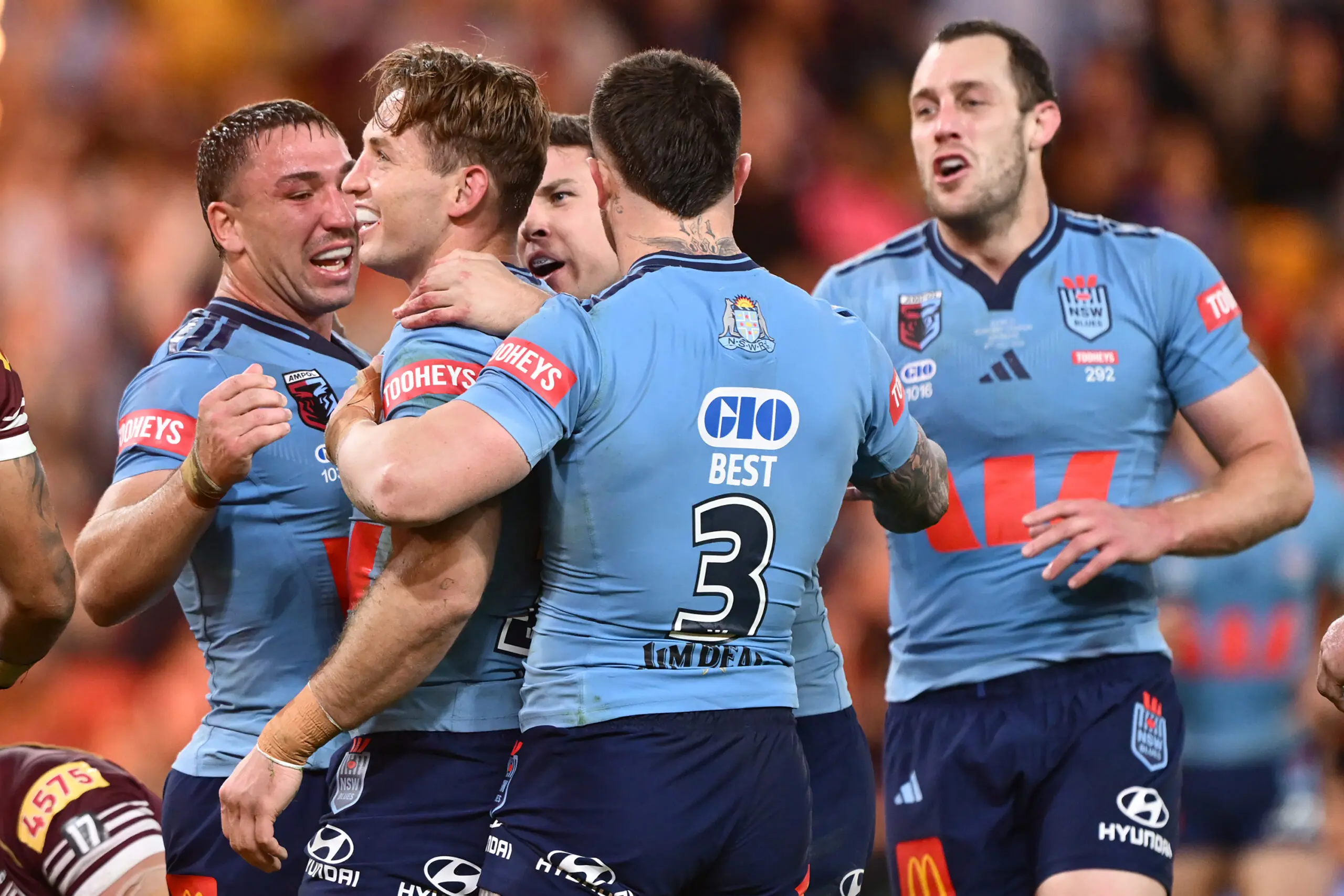
15. Max Plath (Queensland)
The Maroons' bench was led by Max Plath, playing a similar role to Cameron Murray
His output and execution on both sides of the ball showed he will play Origin for years to come.
In Game 2, Plath's involvement and ability to play off the ball in attacking sequences led to a try in a 44-point outing by his side.
16. Addin Fonua-Blake (New South Wales)
Fonua-Blake's upside and talent were why, when the rules changed for Origin selection, he was the first name on the list.
His running style in Game 3 sparked elements of the Blues' attack and complemented the change to Payne Haas' running game.
The big front-row duo of Haas and AFB proved to be a strong combination this series, and as long as the Blues continue to play in a similar style to Wednesday night, the Sharks front rower will continue to be of value.
17. Blayke Brailey (New South Wales)
Blayke Brailey complemented Reece Robson perfectly in the dummy-half rotation.
In Game 1, when Brailey went on the field, he changed the type of service the halves received and the speed around the ruck.
Unfortunately, he missed selection in Game 2 due to an injury he sustained shortly after his Origin debut.
He returned for the decider in Brisbane, following what Reece Robson executed with quality service from the ruck and ran at Queensland's line, leading to tries at the end of the game.
For his performances and role he played in the Blues' victories this series, Brailey deserves this last spot over the likes of Trent Loiero and Lindsay Collins.