Every generation believes its champion is the greatest.
Some will argue for Wally Lewis, Allan Langer, Cooper Cronk or Johnathan Thurston from Queensland. Others from New South Wales will say Peter Sterling and then today, point to Nathan Cleary.
They're all champions of our game.
Despite those who only take a little bit of what I write or say to label me as a Cleary hater, nothing could be further from the truth.
But for me, I just don't think we can talk about him in the same breath as Andrew Gary Johns.
For me, Joey has been the greatest halfback of the NRL era, possibly every era.
Not because he won X amount of premierships or because he played X amount of games. Not even because of the highlights we still watch 20 years later.
He's the greatest because no player has ever had a more complete influence on any given rugby league match, nor have they influenced how the game was played by future generations as much as he has.
Joey could beat you in more ways than anyone else. Like all the other immortals who are our greatest players, he didn't rely on one weapon. He had plenty in his armoury.

He possessed arguably the best long kicking game the game has ever seen and popularised new language into the sport. His short kicking either led to try scoring opportunities or repeatedly forced goal-line dropouts, long before repeat sets became such a critical part of the modern game. When we think of banana kicks and torpedo's, it's hard not to think of Joey.
His passing - off both hands - could hit runners 20 metres away without breaking stride.
His ability to break the golden rule that you should never pass long, close to the defensive line, is something that sticks with me.
He had an uncanny ability to get so close to the defenders in his eye-line that they eventually moved in to thwart him, thinking he must be about to run.
Find Lee's coaching programmes here
Then wooshka! He'd fizz a pass long or even short to a runner so keen to run off a man who could find a hole in the dark.
His defence was outstanding for a halfback. He never hid in the defensive line and often made very strong front-on tackles against much bigger men.
His running game was explosive enough to beat defenders himself, yet he never overplayed his hand.
That's why much of his representative career also saw him play at hooker for Australia and his State. Sometimes he'd start there then move into the halves. Other times, vice versa. Occasionally he would interchange flawlessly between the two throughout a match.
Above all, his decision-making was extraordinary.
Every play looked simple because he had already processed what everyone else on the field was about to do. He was playing chess while everyone else played checkers.
Joey had an incredible ability to scan defensive lines before the ball even arrived. He recognised numbers and patterns. He found the tired defenders, manipulated marker defenders or changed the point of attack at will.
Modern coaching talks constantly about "game management." He understood momentum and cause and effect better than anyone I've seen over a quarter of a century later.
If anyone doubts his influence, go back and watch State of Origin 2 in 2005.
New South Wales had lost the opening game. Johns returned from injury.
Queensland had Darren Lockyer, Johnathan Thurston, Billy Slater and some of the game's biggest stars. But Joey simply took control.
His kicking game repeatedly trapped Queensland deep in their own half. His organisation gave every teammate confidence.
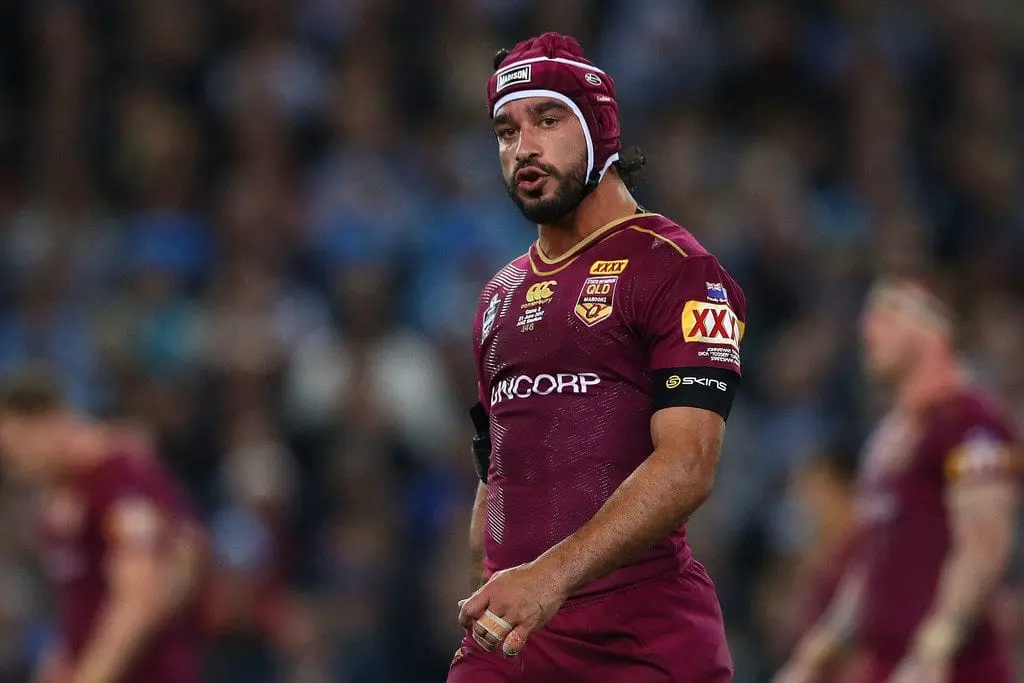
He scored one try, created another, kicked brilliantly and completely dictated the match. It remains one of the finest representative performances by a halfback ever seen.
Throughout his career, Newcastle Knights became a completely different football side depending on if Andrew Johns was playing or not.
When Joey was unavailable through injury, Newcastle regularly struggled to create opportunities and control games. When he returned, they often instantly looked like premiership contenders.
Very few players in rugby league history have had that level of influence over an entire club.
Many people remember Darren Albert's famous try in the 1997 ARL Grand Final.
It was Joey, playing with a punctured lung, that found a slight opportunity in the dying minutes of the match, and his move was followed by Albert who finished it off and sent the town of Newcastle into raptures.
But Joey's performance in the 2001 Grand Final deserves equal recognition. It was against what was thought to be one of the greatest Parramatta teams assembled, and Johns completely controlled the contest and won the Clive Churchill Medal.
One of the strongest arguments for Joey's greatness comes from those who played against him.
Brad Fittler has repeatedly described Johns as the greatest player he played alongside.
Darren Lockyer - one of the greatest players our game has produced - has spoken of the enormous challenge of playing against him and the influence Johns had on matches.
Phil Gould has often described Johns as having another level of understanding of the game, almost coaching while he played.
When legends consistently speak about one player with that level of admiration, it says plenty.
Joey elevated everyone else around him such was his impact.
Forwards ran harder because they trusted he would put them in the right position. Backs received earlier, cleaner football or late ball in the tightest of spaces. Second-rowers use to love playing with Joey and ran better lines as a result.
Without question, he could also dominate today's game. In fact, today's faster ruck speeds would probably make him even more dangerous.
Johns came into the professional game when full-time professionalism was a few years old and so too, was the ten-metre rule. He was as fit as required in that era as there wasn't an option not to be.
His ability to square defenders before passing would create enormous opportunities for edge runners.
And with today's sports science, rehabilitation and workload management, you can't help but wonder whether injuries would have interrupted his career as much as they did.
Nathan Cleary is building a fantastic career. His achievements are very hard to ignore.
But Nathan has also grown up playing in the very dominant Penrith system which is arguably the best junior development system in the history of the game and his Dad is the coach.
I have studied Cleary's rep performances over the years in depth and he has genuinely struggled to get hold of games every time he has been expected to. And I just don't think he has the range of abilities in his game that Andrew Johns did at the same age.
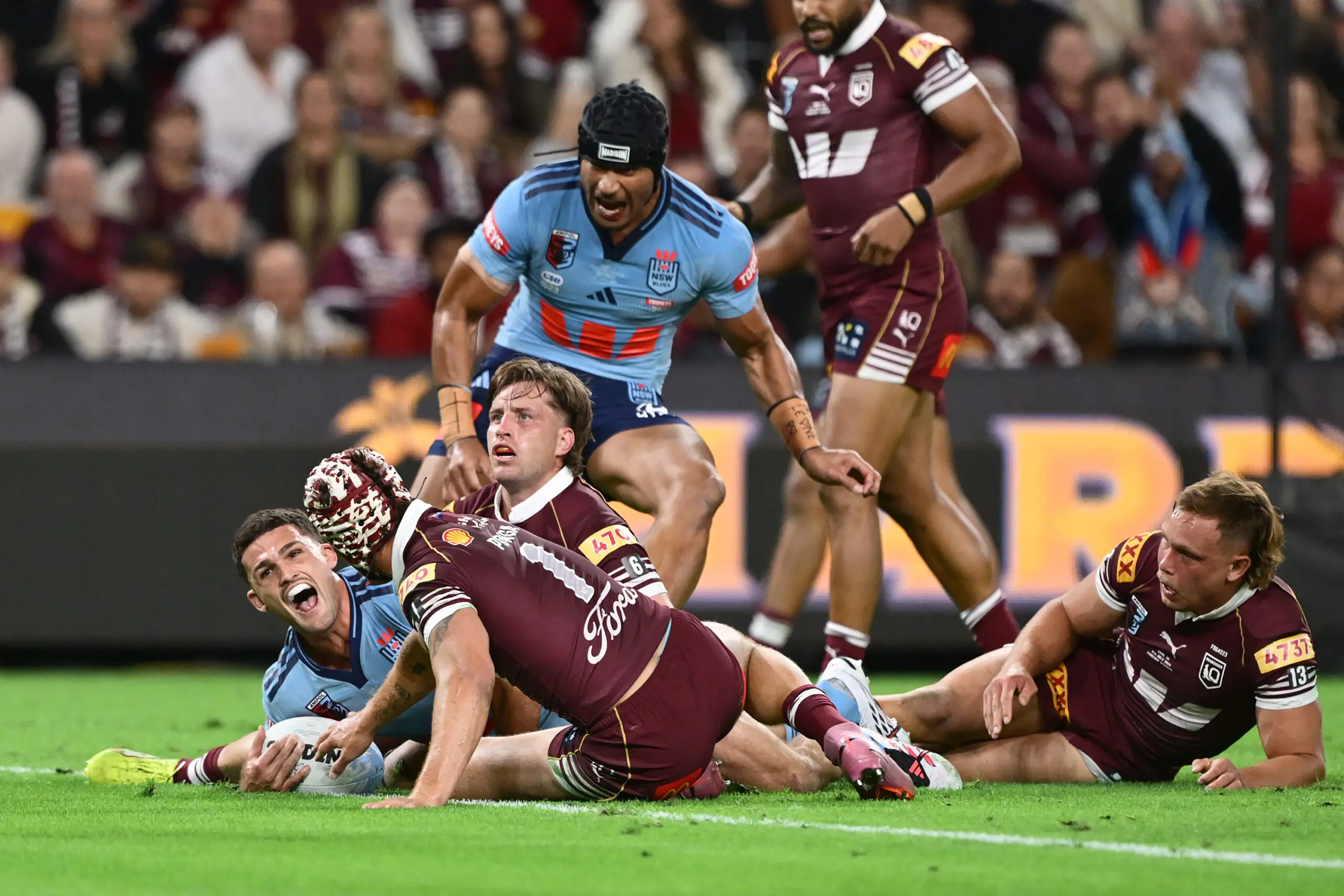
When Johns was playing at Newcastle, they weren't the dominant force Penrith are now. They were at times frustrating to their fans and the club was also a central figure of the Super League War at the time which split the game in two.
Matthew Johns, Joey's brother and long-time halves partner, left for Wigan in 2001, Joey had to take on even greater responsibility as a result.
Of the other halves in the NRL era, Cooper Cronk's winning resume is excellent. The ultimate game manager, he didn't have the silky skills, speed or sleight of hand of so many others in that role, yet if you wanted to grind out a tough win, there was no better man.
Johnathan Thurston produced moments of brilliance few players ever could. I always imagine JT having studied Joey as he was growing up
Every one of them belongs in the conversation.
But if I had one game to win...One halfback to study... I'm still choosing Andrew Johns.
For me, and according to the list of Immortals, he is the greatest halfback rugby league has ever produced.
Lee Addison is a former club coach at Sea Eagles and Panthers and the founder of rugbyleaguecoach.com.au. He is a Coach Mentor and his programmes for coaches and clubs can be found HERE