In just a few months, the Rugby League World Cup returns to Australia.
Yet if you walked down the street today and asked 100 Australians when it starts, where it's being played or even how many teams are involved, I suspect the overwhelming majority wouldn't have a clue.
That isn't because people don't care about rugby league. It's because, for decades, our game has struggled to convince people that international rugby league justifies some thought.
And the Rugby League World Cup probably sits even lower than that in some fans eyes.
Yet ironically, it is one of the oldest World Cups in world sport.
The first tournament was played in France in 1954, just nine years after the Second World War. France had fought for the tournament after enduring years of persecution under the Nazi sympathising Vichy Government, which had banned rugby league during the war years.
Four nations - France, Great Britain, Australia and New Zealand - competed in what became the world's first Rugby World Cup of either code.
And you wouldn't believe which team pulled out only weeks before the tournament… It was the United States of America! They were thought to be unable to compete. It would be a further 59 years before they got there, when ironically, your columnist was on the coaching staff at the 2013 World Cup and they reached the quarter-finals.
And this theme of missed opportunities would be something that would rear its ugly head more than once during the life of the Rugby League World Cup.
The 1954 event should have been the beginning of one of world sport's great traditions.
Instead, the tournament has spent the next seventy years constantly reinventing itself.
The second World Cup came three years later in 1957 in Australia. Another three years elapsed before it was hosted in England in 1960.
Yet as administrators argued it's worth, it would be a further eight years until we would see the next one, as France and Great Britian headed down under to join New Zealand and the second time hosts Australia in 1968.
Already there was a lack of consistency, so we switched to two-year World Cup cycles, with a 1970 tournament and then another in 1972.
After that, things became stranger.
The next wasn't until 1975, when organisers abandoned the traditional tournament altogether and replaced it with a league competition played over several months in different countries and there wasn't even a World Cup final. Australia actually finished second on the ladder before defeating England in a hastily arranged "Challenge Final."
Then things became even stranger, as the format changed again in 1977.
The World Cups of 1985-88 and 1989-92 weren't tournaments at all. They were played over several years as teams fit Test matches around existing schedules before eventually contesting a final.
Imagine trying to explain that to a casual sports fan.
Things finally began to resemble a traditional World Cup in 1995, but even then the changes kept coming.
Ten teams.
Then sixteen.
Then fourteen.
Then sixteen again.
Sometimes four pools.
Sometimes mixed-strength pools.
Sometimes quarter-finals.
Sometimes Super Pools.
Sometimes no quarter-finals at all.
Qualification specifics have changed, cycles have changed and even the tournament dates have changed.

We have had countries announced as hosts, only for that to be changed, twice no less ahead of this year's tournament. The latest example summed up the travails of the Rugby League World Cup perfectly.
Originally awarded to North America for a 2025 event, that tournament was abandoned.
France then won the hosting rights before government funding disappeared and the event collapsed again.
The competition was postponed, moved to Australia for 2026 and reduced from sixteen men's teams to just ten, with a completely new format featuring only four semi-finalists after the group stage.
Every World Cup seems to arrive with another new blueprint.
And then we wonder why the public struggles to invest emotionally.
Compare that with the FIFA we have just seen or the rugby union version. Fans know what they're getting, they know the cycle and they can plan ahead accordingly thanks to the consistency and the recognisable structure.
This then creates tradition and the format and its regularity becomes part of the sport and each event's identity.
In rugby league, the format often changes before supporters have had time to learn the previous one.
Any fan apathy may not have been helped by Australia's dominance of the tournament. After sharing the spoils of the first six versions with Great Britian between 1954 and 1972, Australia has won nine of the next ten played, the biggest shock coming in 2008 when New Zealand pulled their pants down in a classic Suncorp Stadium final.
And if that wasn't enough, the general public will be forgiven for being confused by the trophy awarded to the winners over the years.
When France successfully pushed for the inaugural World Cup in 1954, French Rugby League president Paul Barrière personally commissioned and paid for the magnificent silver trophy at a cost of eight million French francs (about $20,000 Australian Dollars today) before donating it to the International Board.
But, remarkably, the trophy almost became a permanent part of rugby league folklore for all the wrong reasons.
During the 1970 World Cup in England, the original trophy was proudly displayed at the Midland Hotel in Bradford, where the Australian team, the then holders, were staying. Just six days before the final it disappeared overnight, stolen by thieves and seemingly lost forever.
Ironically, the stolen trophy wasn't even due to be presented to the winners because organisers had introduced a sponsored replacement trophy for that year's final, believing the original was safer on public display. Instead, it vanished without a trace.
For the next twenty years the game's greatest prize was missing. During that period rugby league was forced to use several replacement trophies, including an entirely new Tiffany-designed trophy for the centenary World Cup in 1995.
Then, in one of sport's most remarkable twists, the original trophy was rediscovered in 1990 when Bradford, UK resident Stephen Uttley found it lying in a rubbish tip while out walking.
Apart from one or two missing parts, the trophy had survived remarkably well and was eventually returned to the Rugby Football League, after initially being mistaken as a weight-lifting trophy. It has since been restored to its rightful place as the game's most prestigious prize and once again sits at the centre of every Rugby League World Cup and will be awarded to this year's winners.
And don't let this potted history make you think the 2026 tournament can't be a success. In fact, it has every chance.
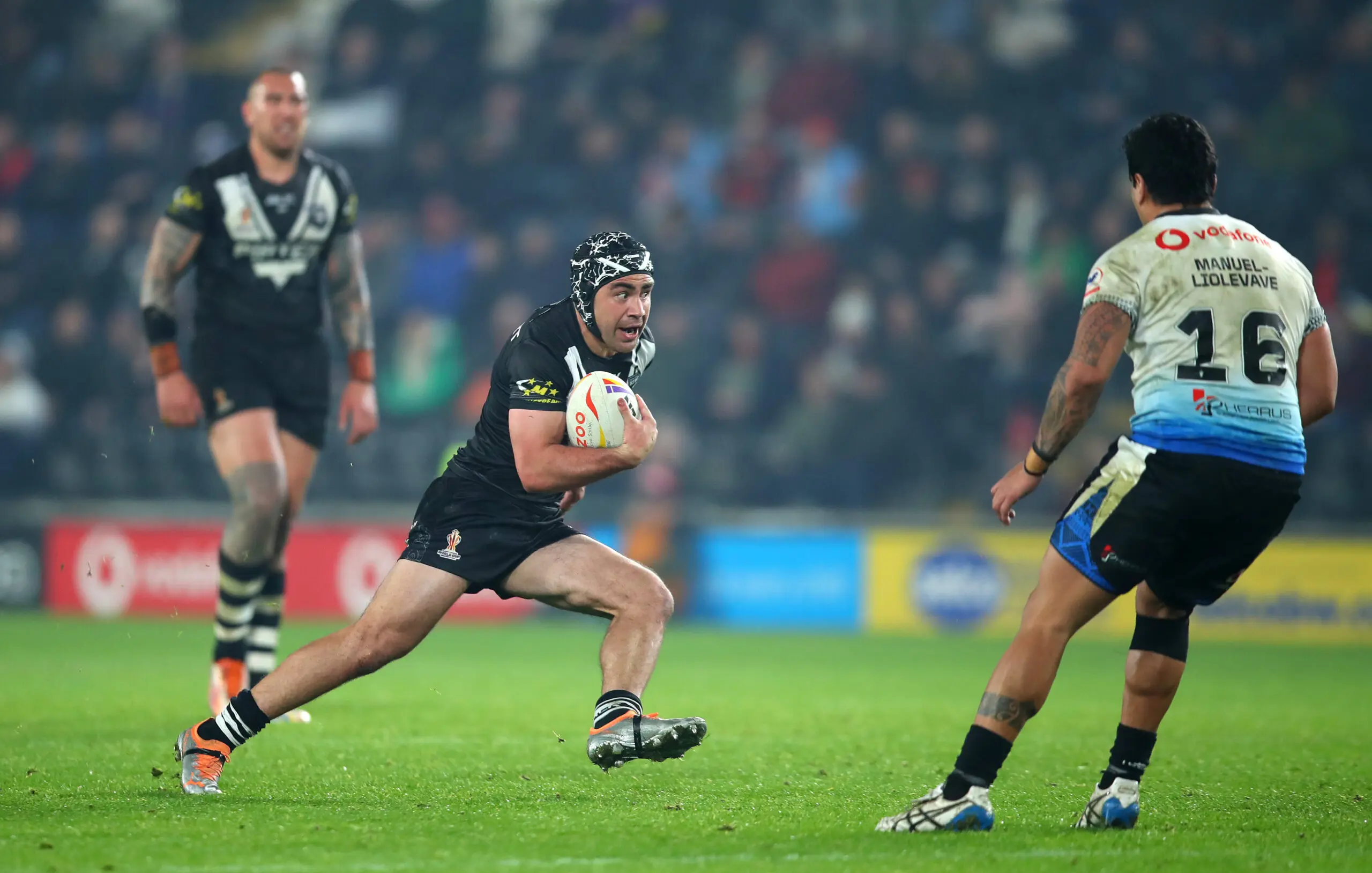
Australia is the spiritual home of rugby league. Papua New Guinea will provide some of the most passionate crowds in world sport, New Zealand will also host matches, and there is genuine intrigue around the strength of nations such as Samoa, Tonga and New Zealand and their chances of breaking the Australian stranglehold on the trophy.
The players care. The nations care. The supporters from each nation certainly care.
And we will all be glad there's some footy to watch after the middle of October.
Lee Addison is a former club coach at Sea Eagles and Panthers and the founder of rugbyleaguecoach.com.au. He is a Coach Mentor and his programmes for coaches and clubs can be found HERE.