


The 2026 Rugby League World Cup promised plenty, and in many ways, it delivered. Record-breaking audiences, passionate crowds and some unforgettable moments showcased the growing appetite for international rugby league.
However, behind the impressive numbers were some glaring issues that left plenty to be desired.
So, was this year's tournament a genuine success, or did it fall short of what the international game needs?
Tournament quality
I think we can all agree the general structure of this year's World Cup sucked.
Quite frankly, I never want to have to see that format again.
This year's tournament proved that having fewer teams, particularly when it lands on the awkward number of 10, can create an unengaging competition with even more opportunities for blowouts.
It is hard to disagree with England's criticism of the format, given they were essentially out of contention after just one game.
How are fan bases supposed to rally behind a World Cup when, after just one match, they know their nation's chances of success are next to none?
It doesn't matter how 'mathematically' possible progression might be. Nobody likes maths when watching sport. They want fairness, excitement and stories worth following.
The France versus Lebanon clash highlighted exactly why having more teams, even if some are considered of a 'lesser' quality, is important.
For what was assumed to be a 'nothing' game, it delivered one of the most intriguing finishes in World Cup history with Lebanon stealing the game away from France 24-20.
Despite both teams not fighting for a place in the finals, they were fighting for their first wins and their chance to be respected in the game, which was just as exciting.

Imagine getting to see more of those match-ups throughout the tournament, giving smaller nations (in terms of Rugby League influence) the opportunity to compete against one another rather than being thrown into the deep end against international powerhouses.
I am glad the International Rugby League (IRL) has continued to keep all nations within the one competition rather than splitting it into some sort of Champions and Bowl tournament. However, this year we essentially did that anyway by eliminating six nations before the competition even began.
Cutting SIX teams from a World Cup is huge, and it ultimately proved to be a failure.
They seemingly recognised that themselves, with the next World Cup set to feature 12 teams across three pools of four. A much simpler structure without the weird mixed-pool nonsense we endured this year.
And there is evidence to suggest fewer teams did not produce a more competitive tournament.
Before the final Sunday group-stage fixtures between France and Lebanon, followed by Samoa and Tonga, the average winning margin sat at 43.2 points per game.
For context, the 2021 World Cup group stage recorded an average winning margin of 42.1 points.
However, after just two fixtures featuring four of the smaller international nations, that figure dropped to 37.9 points.
In other words, the final two games alone reduced the average winning margin by 5.3 points.
More of these match-ups throughout the tournament could have meant closer contests, fewer blowouts and a far more engaging competition.
But apparently, fewer teams were the answer.
Commercial success
I think the commercial success of this year's World Cup is where the tournament really delivered.
Despite some of the issues with the format, there is no denying that people are willing to turn up, tune in and get behind international rugby league.
Australia's win over Samoa on Sunday evening reached a massive 3.68 million viewers, with an average audience of 2.05 million, making it the most-watched Rugby League World Cup match ever.
It also attracted 733,000 viewers on 7plus Sport, setting a new record for the largest streaming audience for both a World Cup match and an international rugby league game.
The crowds have been just as impressive.
The semi-final between New Zealand and Tonga at McDonald Jones Stadium in Newcastle attracted the third-largest attendance in the stadiums history, while Samoa's clash with Tonga at CommBank Stadium produced the highest attendance at the arena with 29,411 attendees.
And if there was ever any doubt about the appetite for international rugby league, the final between New Zealand and Australia at Suncorp Stadium is also sold out early this week.
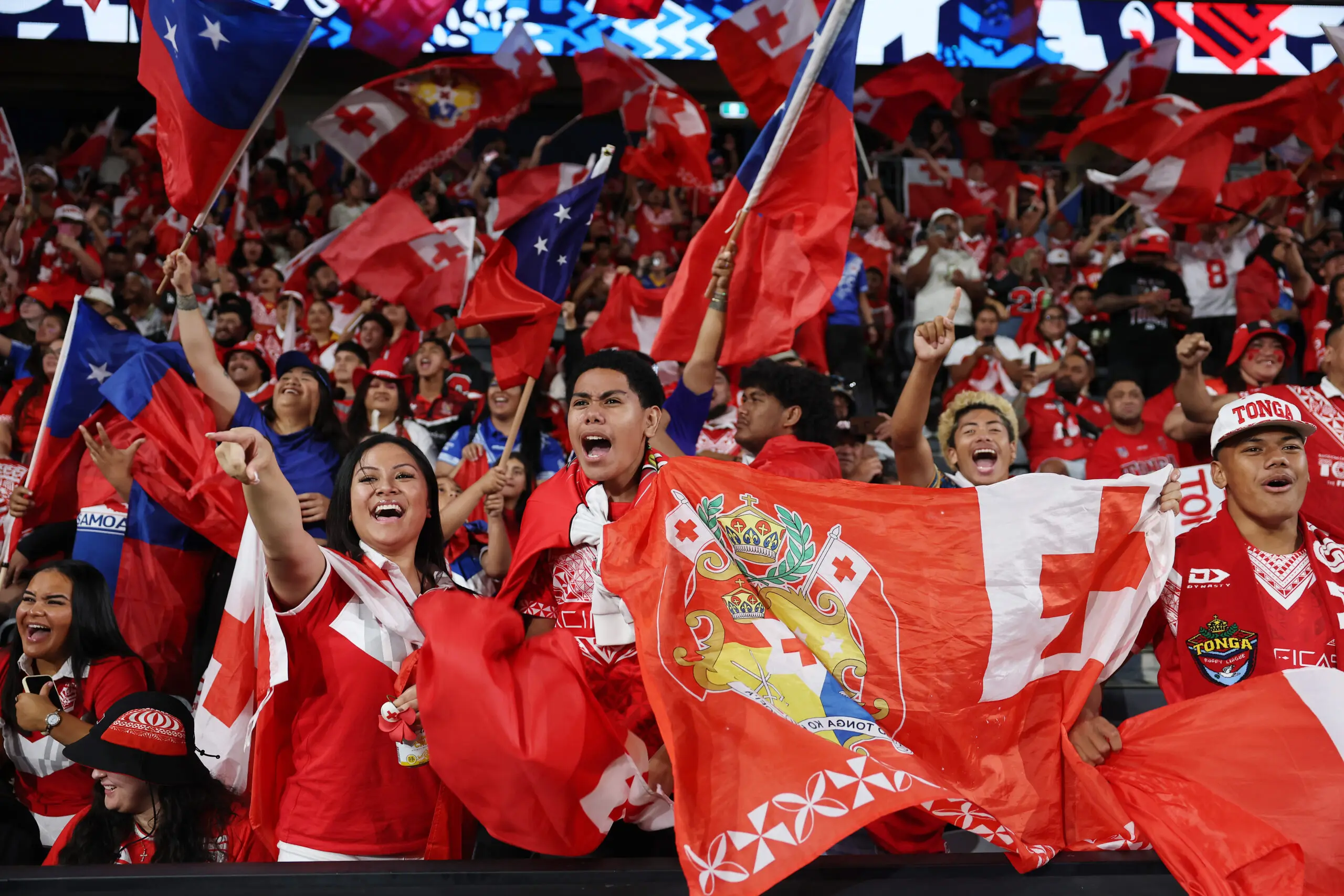
The atmosphere at Samoa versus Tonga was something genuinely special. The noise, the passion and the sheer number of supporters who turned out to watch two nations go head-to-head created an electric atmosphere that you simply cannot manufacture.
Having the tournament hosted in Australia has undoubtedly helped, with large pockets of passionate supporters able to attend matches and create that sort of occasion.
However, there are still areas that need attention.
The scheduling of matches was disappointing at times, particularly with several 8pm kick-offs on a Sunday evening. For supporters in New Zealand, that meant watching games as late as 10pm, hardly an ideal time to be asking fans to tune in and support their national team.
And while the records are fantastic, I cannot help but think about how much more engaging this tournament could have been with a better format.
Imagine the genuine and prolonged intrigue that could have surrounded the group stages if more nations had been given a realistic opportunity to progress, rather than having their campaigns effectively decided after one match.
The numbers show there is a genuine appetite for international rugby league. The challenge now is to make sure the product on the field gives those viewers and supporters every reason to keep coming back.
This World Cup broke records, attracted enormous crowds and produced some incredible atmospheres. That is a success by any measure.
But bringing people through the gates and onto their televisions is only half the job. The next step is giving them a competition that consistently satisfies the interest they have shown.
The final verdict
Ultimately, the 2026 Rugby League World Cup was a success, but only just.
It delivered record audiences, incredible crowds and some genuinely memorable moments, but there is still a long way to go before international rugby league reaches its potential.
One thing this tournament should have made abundantly clear is just how important Pasifika nations are to the game. The passion, talent and support they bring to international rugby league is undeniable, yet there is still a need to do more than simply capitalise on it.

These nations need to be properly invested in, supported and given genuine opportunities to grow, rather than having their contribution recognised only when it benefits the game commercially.
While the final will feature Australia and New Zealand, the two nations widely expected to be there before a ball was kicked, this tournament has shown what international rugby league is capable of when given the right platform.
The next World Cup will be telling. It will determine whether 2026 was the launchpad for a stronger international game or simply another missed opportunity to build on its potential.