

There's no question that there are concerns about the Parramatta Eels' recruitment, their pathways, Jason Ryles as coach in the future, and their new recruits, Jarome Luai and Spencer Leniu.
Contextually, the Eels have not been 'rebuilding'.
Instead, the front office has struggled to create a competitive roster since the 2022 Grand Final.
In reality, the Eels had players who performed well for one season prior to negotiating their new deals, giving them leverage after the 'sudden' success.
Since then, they have either left the club and struggled in their new opportunities or have retired.
There have also been unexpected calls with Dylan Brown, who already had a well-above-market-value deal, offered the richest deal in the game to join the desperate Newcastle Knights, who had several players in their final year of very bad deals done by former recruitment boss Peter Parr.
Blaize Talagi left after the 2024 season because he wanted to play five-eighth and the Panthers offered the most appealing opportunity to play next to Nathan Cleary.
After Talagi made his decision, the club pursued Isaiah Iongi, who has since extended his contract with the Eels until the end of the 2030 season.
Now, there's something intriguing that could unfold at the club from a tactical perspective for the Eels in 2027.
Samoa's World Cup games this campaign have shown that, in theory, Ryles can run lineups with Jarome Luai, Spencer Leniu and Junior Paulo on the field at the same time without compromising the Eels' identity with the ball in their hands.
The three players, while talented, play different styles, and Samoa could have struggled to fit all three players together given the combination of wind-up running mechanics from Leniu, a five-eighth who plays halfback in the tournament, who plays instinctively and eyes-up, and Junior Paulo, who is another big body in the front row that can struggle with mobility to shift defensively and whose touches of the ball can be reduced when players like Luai are on the team.
Paulo is an underrated passer for a front rower and has shown that, when he has space and time, he can unlock his ball-playing ability in an Eels side that likes to shift the ball side to side in red zone set sequences.
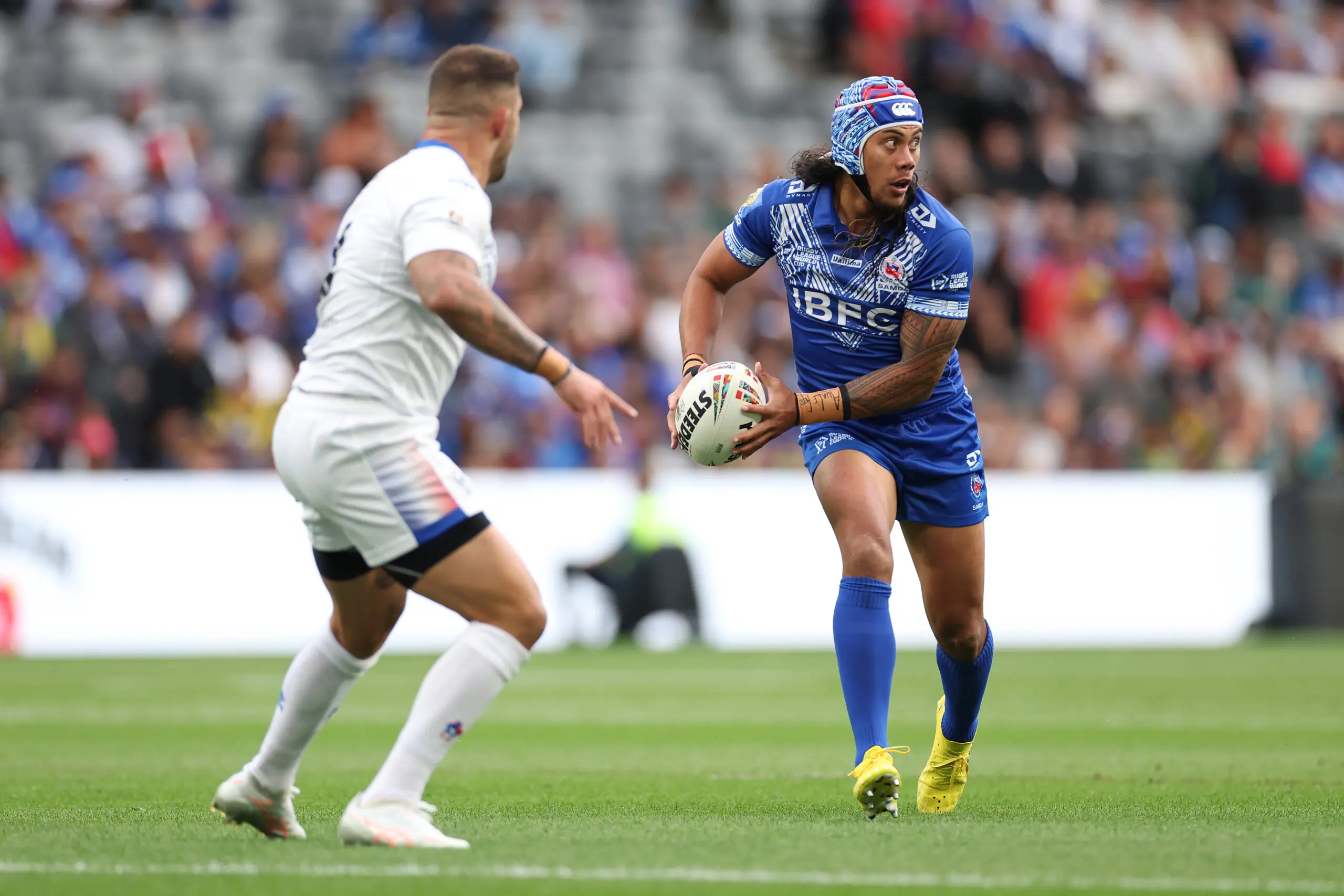
Against Tonga, the three of them, with another Eel, Ronald Volkman at five-eighth, showed their ability to play eyes up and a freestyle approach that's hard to establish in a physical World Cup game like Tonga-Samoa.
Playing under NRL rules this World Cup, the four players played a pivotal role in combining their individual efforts to keep Samoa in the game.
To set up Volkman's try in the 68th minute, Paulo played the ball to Benaiah Ioelu, who scooped it up to deliver a short ball to Francis Molo.
Molo offloads the ball to Paulo, who offloads to Spencer Leniu before finding Ronald Volkman behind.
"SAMOAN SUPERMAN."
Impact sub personified, Ronald Volkman take a bow!
#RLWC2026 https://t.co/sGKN0ZjU9M
— 7RugbyLeague (@7RugbyLeague) November 1, 2026
The five-eighth steps off his right foot and fends Tuimoala Lolohea before burrowing his way over the try line against Lehi Hopoate.
Ryles has introduced a side-to-side shift offence that has offered scoring potential since becoming the Eels' coach.
However, the Eels' tactics suffer because their game plan eliminates creativity and unpredictability.
The club has struggled to create different looks from different spots without relying on Mitchell Moses getting the ball from the middle to either side.
That's not a criticism of Moses, but a critique of the club's inability to generate attack from different areas on the field.
Leniu and Luai could be the team's key to throwing teams off the scent of what the Eels want to do and how they want to execute it.
The biggest questions about the Eels are about Ryles' game plan for how he will utilise Spencer Leniu.
Does Ryles start Leniu, and if so, how many runs per set, per 20-25 minutes, does his front-rower get?
If Leniu starts on the bench, when does he come on, how will he get his runs, what spots on the field will he be utilised from, and what pace will the Eels be playing with and without him on the field?
Lastly, will the Eels have Luai, Leniu, and Paulo on the field at the same time late in the game?
Then, defensively, can the Eels have Leniu, Luai, and Paulo on the field at the same time?
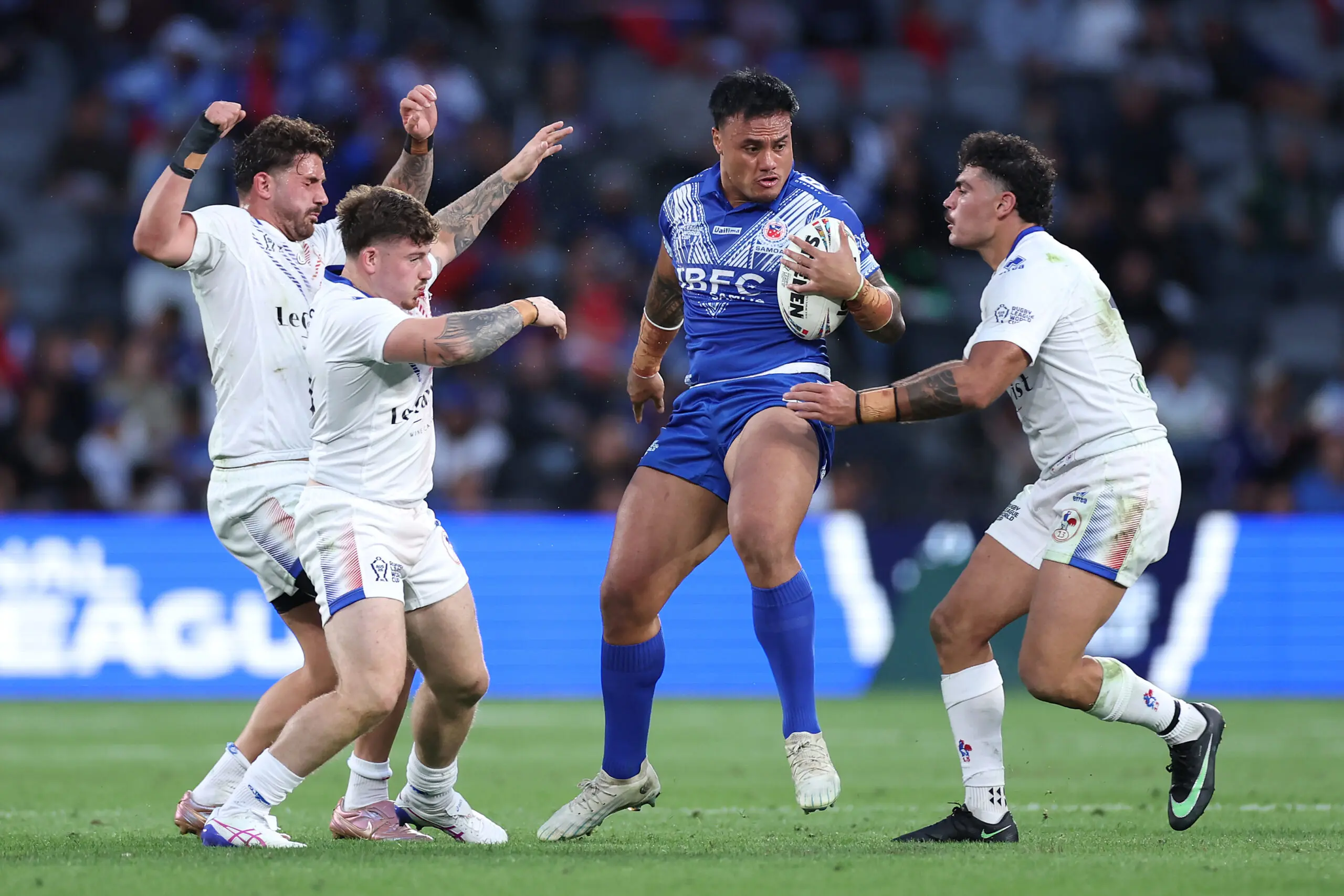
Against Tonga, Samoa's defence relied on an interconnected group from the middle third to either side.
Addin Fonua-Blake scored the game-winning try through the gap Samoa's defence created where Leniu and Paulo stood, with the line split into two groups with their left edge.
AFB SCORES!
Advantage Tonga...
#RLW2026 https://t.co/J2uH941D9q
— 7RugbyLeague (@7RugbyLeague) November 1, 2026
Considering Ryles' tendencies since becoming the Eels' head coach and the club's desperation for those two new players, he will most likely have the three Samoan stars on the field at clubland at the same time.
And who's to blame Jason Ryles for thinking like that? Leniu and Luai have premiership-winning experience, and Leniu was a huge star in his role for the Roosters in the Grand Final.
Defensively, the Eels could reinvent their methods to counter opponents' attack by shifting in groups with proper spacing, improving tackle types and selections, and making high-percentage decisions based on what teams collectively like to do or whether they have a specific game plan on a certain team.
It would be a stepping stone to stop opponents from gaining ideal field position so Parramatta can play from kick returns and transition into a pace-and-space system.
Attacking-wise, the Luai move says Ryles couldn't accommodate Ronald Volkman as often as he should.
With Luai, Ryles believes in the calibre of player the Samoan half can be.
This will likely see the Eels coach give his new five-eighth the chance to play the game how he sees it.
Luai impressed against Tonga with a solid kicking game that could help Mitch Moses at times.
Cross-field kicks from the left side in the red zone, bombs on the left side around the halfway line that allow the Eels to swarm the opponents' backfield, and kicking the ball down the field early in the set to throw off the defence could be ways that Luai could add to the Eels without taking away Moses' long-range kicks that at times reset the scale for earning field position.
The 29-year-old has a direct running game towards the defensive line, with hesitations and footwork that halt defensive lines.
When Luai was a high-usage half at the Wests Tigers, he struggled to adapt to that style versus playing off the cuff.

Now, at the Eels on a discounted deal and not wearing the halfback jersey, Moses can play his game with a half that has similar instincts of actually testing the defensive line directly in individual and collective match up assignments and the decisions from defenders that have to cover Luai, who at times in the best way, plays without thinking what he is going to do.
If he doesn't know what he is going to do around the red zone, playing off shifting and out-the-back shape and being the second or third receiver of the ball, defences can't prepare for Luai other than to hold up their end defensively and try cutting off Luai's running room.
Luai and Leniu are rhythm and flow players; they have to build their belief in the gameplan game to game fully and not overthink, and if anybody can make accommodations for those two players without taking away from their games and utilise them successfully in that respect, rather than Trent Robinson and Benji Marshall, Ryles certainly has a chance to keep his job for the future and show that he can coach the game's most wildcard-like players and show the Eels are not the conventional structured team, because right now, the Penrith Panthers and the New Zealand Warriors are the only truly structured teams in the game at the moment that don't have players that feed off rhythm and flow in a way that Leniu and Luai do.
Ben Gardiner's game plan for Samoa in this World Cup tournament could potentially help Ryles elevate his coaching style and integrate its two new recruits in a way that clubs and coaches with better reputations have struggled to do.