


Heading into the 2026 season, most analysts and fans had predicted the Dolphins to be firmly in the top eight, some even believed they could be a top four side this season.
Isaiya Katoa was expected to take the next step in his development, and Selwyn Cobbo's arrival was to add some much needed strike to the Dolphins backline.
In 2025, the Redcliffe-based side made unwanted history, becoming the first team in over 100 years to end the season with the best attacking record but still miss the finals, highlighting their defensive woes and inconsistencies.
Therefore, it made sense that throughout pre-season, the club's main focus was their defence.
"That's been a big focus for this camp and it's always hard pre-season, so I think we're going to be going good," Jake Averillo told the media in February.
"We know we're a very good attacking team, it's just applying those little things to defence, little effort areas that are going to win us games."
After seven rounds though, it doesn't appear there has been much improvement defensively, with the club having the fourth-worst defence on average.
Currently languishing in 12th on the ladder with only two wins to their name, it begs the question, have the Dolphins gone backwards this season, and if so, how far.
The short answer is, yes, they've regressed significantly.
If it weren't for the two points from the bye round, the Dolphins would be 15th.
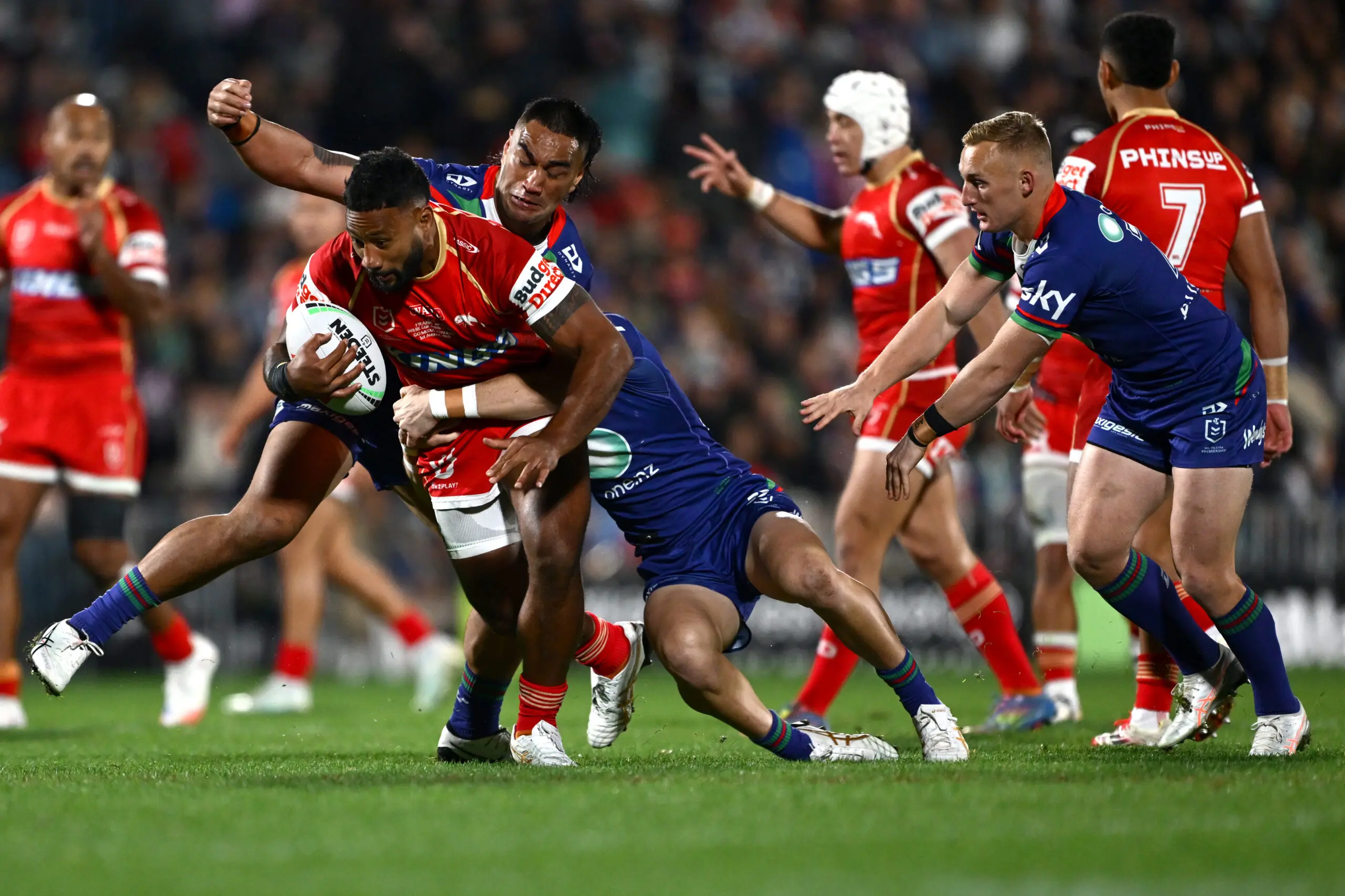
Looking at their results, a 30-point performance against the South Sydney Rabbitohs in Round 1 wasn't enough to secure the win, conceding 40 in the process.
They then kept the Gold Coast Titans and Cronulla Sharks to 14 and 10 points respectively, starting the season 2-1 and suggesting they had in fact turned a corner defensively.
However, across the next three games, they conceded 101 points, losing all three.
It's clear the defensive inconsistencies that plagued the Dolphins last season are still apparent, despite allegedly focusing on it during pre-season.
More concerning, though, is the impact it has had on the Dolphins' attack.
As mentioned, they had the best attack in the league last season, but this season, the Dolphins have the sixth-worst attack on average.
Generally, a team needs to score 24 points to win a game, something the Dolphins have only accomplished twice this season, one of which was the defeat to the Rabbitohs and the other in a victory over Cronulla.
The only two teams to have reached that number fewer times are the Titans and the struggling St George Illawarra Dragons.
For a team with attacking weapons such as Isaiya Katoa, Hamiso Tabuai-Fidow and Herbie Farnworth, they should not be struggling going forward as much as they have this season.
But their attack, for the most part, looks clunky, disjointed, and is riddled with errors, led by Cobbo who has already made 13 this season.
Simply put, the Dolphins don't look a chance of making the top eight this season.
While there is still a lot of time to salvage their season, the fact remains they are scoring seven points less per game this season, and conceding around three more.
That is not a team who has fixed any problems, but instead added new ones.
While the media has been so caught up on the Dragons recently, the form of the Dolphins has gone extremely under the radar.
But if things aren't to improve in Redcliffe, the cameras may very well turn towards the struggling side.










To my untutored eye, it looks as if they have spent the pre-season working on defence – at the expense of attack.
The trouble is that with the six-again “touch-footy” style that the NRL has engendered, they would have been better off simply concentrating on out-scoring their opponents.
If you saw the Cowboys v Sharks on Friday night, you would have seen the epitome of the new style. Eighty points scored in eighty minutes.
Perhaps the successful teams will be the ones that realise that exhausting their players through lots of defensive work is not a recipe for success, and playing fast, expansive football – keeping the opposition on the wrong foot – is the way to win.
I think that if coach Woolf realises this and implements it, then the team has the players – and enough matches remaining – to still make the eight. The question is whether he is _willing_ to accept it, to throw away the changed strategy, and to go back to the 2025 style.
your not wrong