


As the Kiwis start their Rugby League World Cup campaign against the Kangaroos, the New Zealand starting lineup has raised plenty of questions.
One of those questions is whether Moses Leota should be starting.
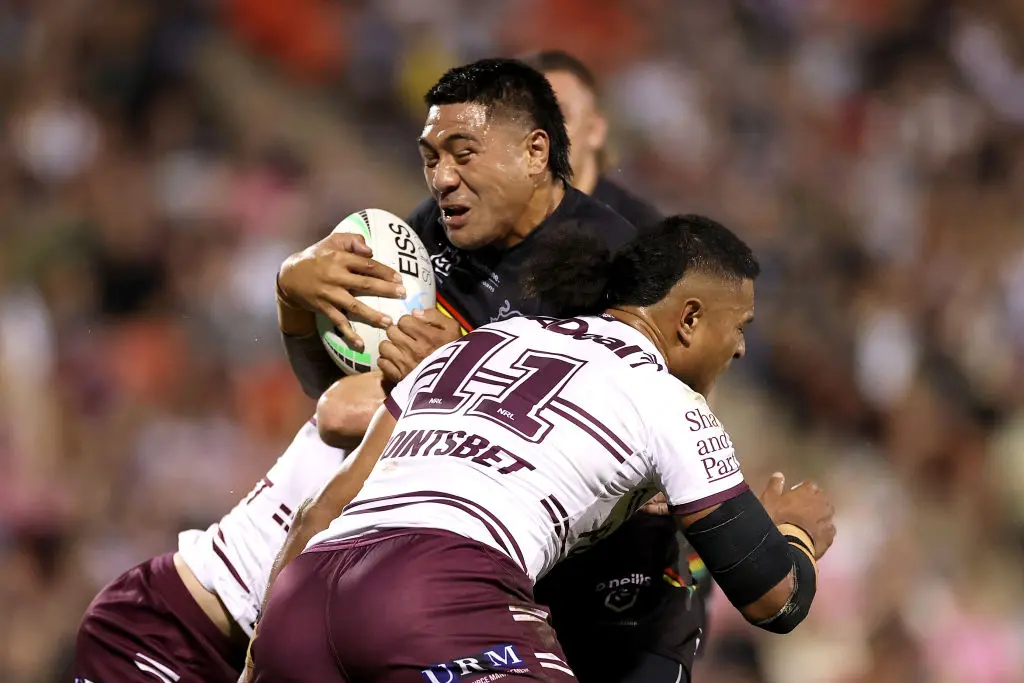
Leota is renowned as one of the most feared front-rowers in rugby league, known for his explosive opening carries and tough defense. Head coach Stacey Jones seems to be sending a message to the rest of the competition: They will start with complete power.
With a tough first fixture against Australia, the Kiwis will need to dominate through the middle, and controlling the first 20 minutes is crucial. Moses Leota can provide instant power and muscle to ensure that New Zealand isn't closed out early.
By starting Leota, Jones is also calling on the Penrith Panthers connection with James Fisher-Harris given the duo played together at the successful club for many years.
Reuniting the two forwards allows New Zealand to establish a premiership-winning foundation in the middle. Their shared timing, defensive communication, and chemistry can give the Kiwis an immediate advantage in cohesion.
Leota is a powerful force; it's extremely rare for opposing players to tackle him one-on-one. This creates gaps through the defensive line for a quick offload. He consistently generates midfield momentum and quick play-the-balls that will prove to be a fantastic addition to the elite spine the Kiwis have.
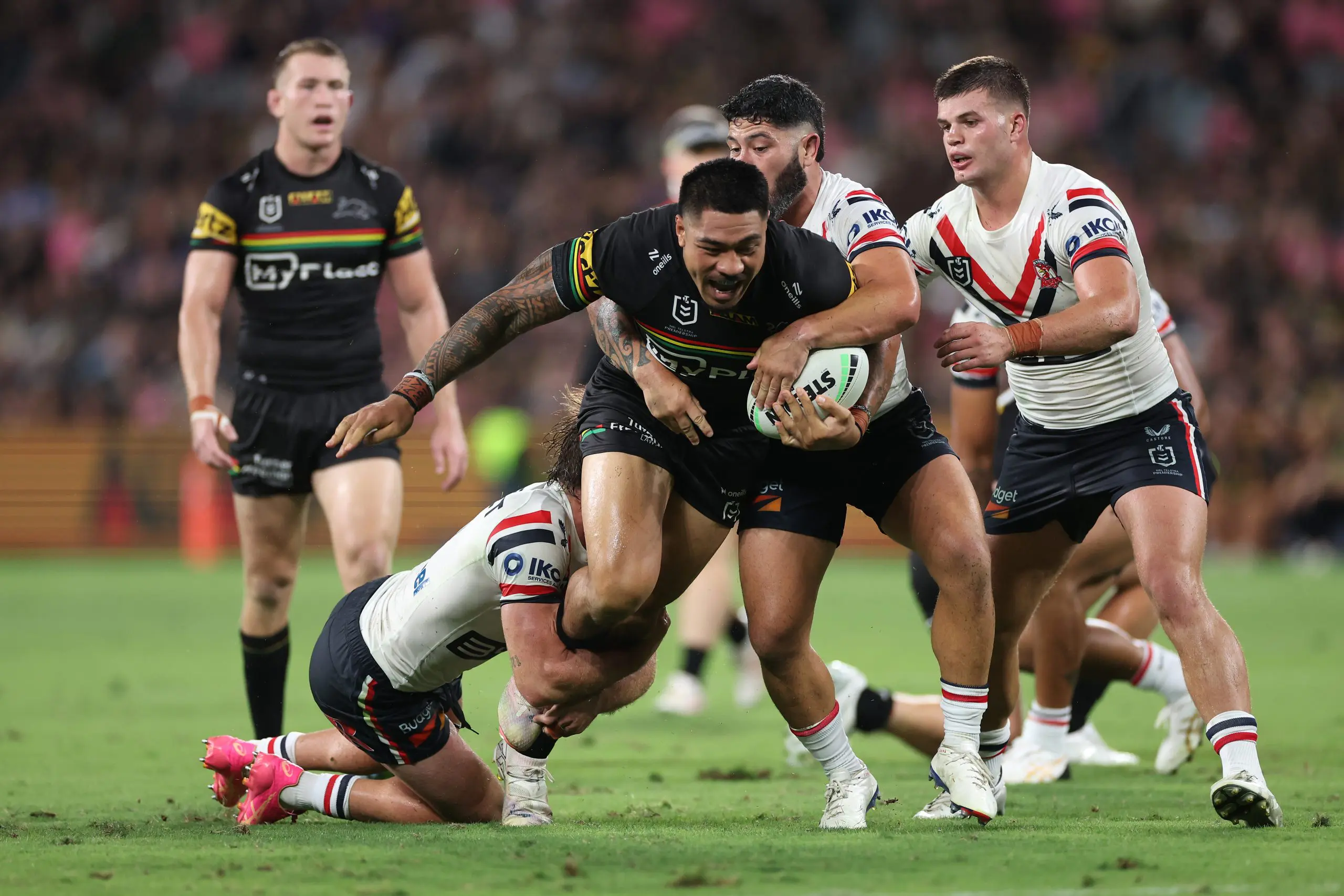
However, Leota's best moments are arguably off the bench. The injection of force on tired defenders allows Leota to rip through defensive lines. By starting the New Zealand international, the Kiwis lose the interchange punch Leota can provide.
The decision to start Leota can be used strategically if Stacey Jones is able to make the changes when they need to be made. The Penrith star is a maximum-effort, high-intensity player. This means that Jones needs to manage his stint on the field carefully, in order for Leota to not exhaust his energy during the opening exchanges.
Joseph Tapine would be a clear option at prop for the starting lineup, and the combination of Tapine with Fisher-Harris could prove lethal for teams.
Tapine brings elite footwork and arguably the most elite front rower in Rugby League, but Jones has elected Tapine to start in lock.

Although many might question the decision, the selection has given the Kiwis a plethora of options on the field at the same time. At lock, Tapine has more freedom to run in the middle third, picking his spots to offload and play a linking role for the halves.
This essentially gives New Zealand three starting-caliber props; this maximises all their star power at the beginning of the match to suffocate opposing teams. The rest of the work will be left to the outside backs, and the Kiwis have an elite lineup to carry the load.
It seems the coaching staff of New Zealand has elected to use all three enforcers in the starting 13 instead of choosing one over the other.
However, the selection of Tapine in lock has created discussion over why New Zealand Warriors star Erin Clark is starting on the bench.
Clarke has had a standout run with the Warriors, winning lock of the year at the Dally M Awards for the 2025 and 2026 seasons.

The decision not to start Clarke showcases how powerful the New Zealand forward pack is. Clarke's biggest strength is his high intensity and incredible versatility; this allows Jones to utilise him when needed, and it could well be that his role off the bench is better served than starting, despite his efforts for the Warriors.
Of course, New Zealand also have other elite forwards on the bench, with Naufahu Whyte widely expected to start but to be used as impact, and Xavier Willison also listed on the pine where he could yet either play in the middle or on an edge.