In rugby league, forgiveness isn't earned.
It's automatic.
Too often, NRL players find themselves on the wrong side of the law, only to go on a seemingly long road to redemption before they run back onto the field, with their legal issue behind them.
The issue is, this isn't redemption, it's recycling.
In a sport widely considered to be the 'people's game', rugby league has perfected an uncomfortable systemic truth that no one is ever finished, provided two things:
- They can still play.
2. They are still marketable.
This is a pattern that cannot be ignored, it's essentially a talent economy of forgiveness.
The players who get second and third chances aren't reserve graders, they're capable, first-grade-proven players.
Todd Carney is a prime example of this.
At his best, Carney was scintillating, he could swing a game in his team's favour with a mere sidestep.
However, off the field, Carney was no stranger to run ins with the law.
The first incident came in 2006, when the then-20-year-old was charged with drink driving and reckless driving, which he was found guilty of in 2007 and had his license subsequently suspended for five years.
Later that year, Carney, accompanied by teammate Steve Irwin, was behind the wheel and led police on a high-speed chase in Canberra, resulting in the former being charged with negligent driving and driving while disqualified.
The NRL's double standards began to show as Carney, who pleaded guilty, narrowly avoided jail time, but was free to continue playing for the Canberra Raiders, ultimately becoming their top try scorer for the 2007 season.
However, quite ironically, Irwin, who wasn't charged with any crimes, was sacked immediately by the club in June 2007.
A year later, Carney was alleged to have urinated on a man in a Canberra nightclub, and in August 2008, he was sacked by the Raiders and de-registered by the NRL, after failing to accept the club's five-point rehabilitation plan.
He made various attempts to return to rugby league, but to no avail. The UK blocked his visa to play in the Super League and the NRL refused to register him for the 2009 season.
Then, after a tumultuous year in which Carney went on a drunken vandalism spree in Goulburn, receiving a 12-month suspended jail sentence and being forced to go to alcohol counselling, the NRL did what it does best.
Despite multiple chances already, it gave Carney another one.
Signed by the Sydney Roosters on a three-year deal, Carney's 2010 season was miraculous, winning the Dally M player of the year and Provan-Summons medals and taking the side all the way to the NRL Grand Final.
It seemed like a turning point in his career, the tabloids were littered with stories surrounding Carney's road to redemption.
But in 2011, Carney was charged with low-range drink driving, and then was found to be drinking a month later with teammate Anthony Watts.
With two alcohol-related incidents in three months, the five-eighth was stood down indefinitely before being released from the final year of his contract for another breach of his alcohol ban later that year.
Yet, the NRL were happy to register his next contract at the Cronulla Sharks, with Carney seemingly immune again to sanctions after his momentary redemption in 2010.
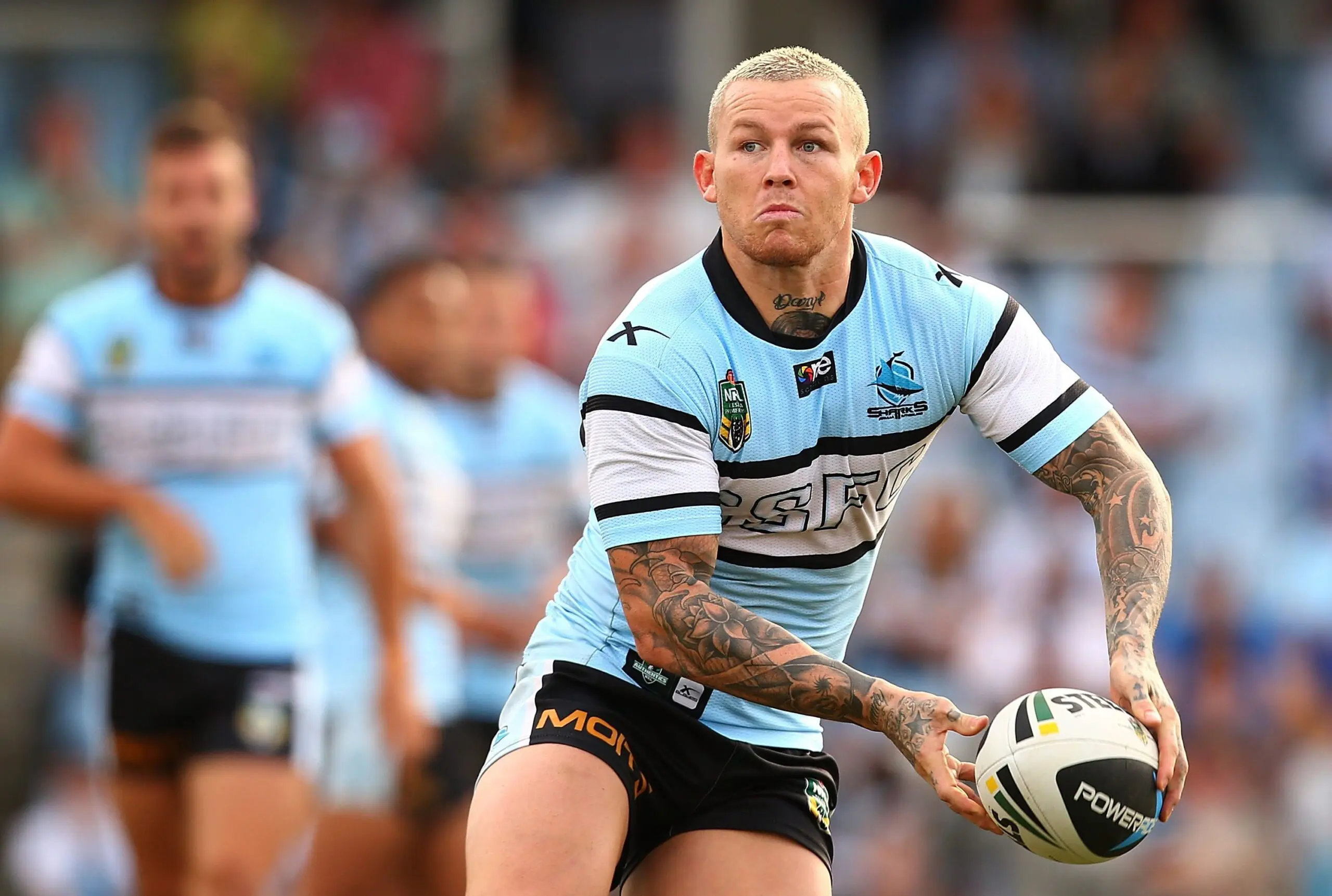
However, the pot finally boiled over in 2014 when Carney was sacked by the Sharks after the infamous 'bubbler' photo surfaced online.
While the photo was certainly quite unsavoury, it wasn't illegal.
Carney hadn't committed a crime, he'd committed embarrassment, highlighting the NRL's moral universe where humiliation ranks higher than harm.
After every incident, the NRL could market Carney as 'reborn', but after this, his image was beyond salvage.
The systemic immunity that the NRL grants players ties into the Australian culture of mateship and clubland philosophy that 'he's made mistakes but he's still one of us'.
It's a culture that can't say no.
Just like the NRL can't say no to criminals.
Carney's saga wasn't an anomaly, it was a blueprint.
Take Matthew Lodge, for example.
In 2015, he assaulted a man, punching him multiple times in the head and also terrorised two German tourists, but made a plea deal and had the charges reduced to reckless assault, a misdemeanour in America.
Then, once back in Australia, he was charged with eight counts of domestic violence, one of which he pleaded guilty to, avoiding a conviction.
Yet, the NRL, who stand firmly against domestic violence, decided to register Lodge's league minimum contract with the Brisbane Broncos in 2018.
Why?
The NRL has a commercial incentive to bring back these players, it drives ratings during the season and clicks during the off-season. The league can package the drama within a safe frame.
"Matt spent a long time out of the game and spent a huge amount of time in counselling and rehabilitation, including a specific course around domestic violence," Todd Greenberg stated in 2016.
"We made a decision to register his contract and nothing that was written on the weekend was new information to us."
But the fact of the matter is that the NRL doesn't ask itself,
"Has this player redeemed themselves?"
It asks,
"Can we carry the backlash?"
Then, once the outrage cycle ends, the NRL reaps the rewards with stories of redemption flooding the back pages.
This sentiment is no more obvious than in the recent case of Ezra Mam.
In October 2024, the 22-year-old was at fault for a head-on car crash, injuring three people, including a very young girl who required hospitalisation.
Mam was subsequently charged with, and pleaded guilty to driving one count of driving while relevant drug is present in blood and driving without a license.
It was a crime that would've seen an ordinary citizen thrown behind bars.
But after receiving a slap on the wrist from both the court and the NRL, Mam returned to the game in Round 10, faced with deafening boos from the crowd and journalists crucifying him online.
Fast forward to today, and you can't find a story about Mam online that doesn't mention the word 'redemption'.
In truth, the NRL's 'redemption' culture is actually about containment, not change.
There are exceptions, though.
Cameron Munster's rehabilitation for alcohol and gambling problems in the wake of the white powder scandal saw him completely turn his career around.
Yet, the recycled pattern is still undeniable.
Simply put, the NRL will reset the storyline until it can be reset no more, and only then will you be shown the door.
Get set for the footy with the FREE Zero Tackle 2026 NRL Season Guide! Packed with 130+ pages of player profiles, team previews, insights and analysis, the 2026 NRL Season Guide is built for fans who want the full picture. Download your free Season Guide HERE.