This is not an article about the coach of New South Wales, Australia or the incumbents of those roles.
Laurie Daley and Kevin Walters are now comfortably in those seats.
Instead, it's an article on why coaches get linked with a particular job.
Why does a coach with little experience get the highest-level job in the state of New South Wales?
Also, why was Kevin Walters (a very experienced coach) not one of the main contenders in the media before he was eventually selected?
To give you a historical example, (also one that sticks out like a sore thumb), in 2020, when Bulldogs coach Dean Pay fell on his sword at Canterbury, the only name ever in the frame to takeover was Trent Barrett.
Barrett the coach who, when in charge of the Manly Sea Eagles, didn't do too great. He then backed it up with some more average outcomes when in the hot-seat at Belmore.
The point I'm trying to make here is the criteria clubs, states and media apply to selecting anointed coaches.
The media (in unison) spoke of about Barrett's skills as an ‘attack coach' in 2020, calling on the success he had with the Penrith attack and previously, the Sea Eagles attack.
Laurie Daley's qualification for the New South Wales and Cameron Smith's media anointment as Australia coach was based on their actual footballing ability more than anything coaching wise.
To suggest that there was ever enough evidence that Laurie Daley and Trent Barrett could excel in their roles is misguided to say the least.
Cameron Smith is unknown as a coaching exponent. To throw him in to being the Australia coach would have been like a kid graduating from school and them being appointed as head teacher in their first year.

Never in the history of work-place recruitment have the skills required to do a particular job been so far removed from the qualities of the candidates short-listed.
This happens in many sports, not just rugby league, to be fair to the NRL eco-system.
So, for the benefit of those clubs, the states and media that make the same mistakes over and over, here is my offering as to what a head coach actually does.
When in position as the head coach at a big club, in most circumstances, everything in the football department basically revolves around you. You can be guaranteed that your day-to-day job will include the following, and this list isn't exhaustive.
- Being the on ultimately responsible for the team's performance.
- Picking, or at least, having the final say on the team line-up each week.
- Planning how training will work (potentially in conjunction with otgher staff.
- Having the final say on tactics and strategy, if not being the one who determines it entirely.
- Dealing with and being the team's spokesperson responsible to those 'outside' the organisation.
- Dealing with the 'fall out' of the above points.
» Buy Lee's book at rugbyleaguecoach.com.au
An NRL or Super League coach will plan training at least towards the back end of the week before a fixture, if not, a full month or even more, in advance.
My experience from my time at NRL clubs taught me that you knew weeks in advance what training would be from a ‘big picture' perspective.
Namely, what time the field sessions were, gym sessions and ancillary tasks, a full four to six weeks in advance.
Then of course, you have to work in conjunction with other staff. An NRL or Super League head coach will normally have two or three assistant coaches, a strength and conditioning coach or two (or more) plus sports scientists, video analysts, maybe psychologists and much, much more dependent on budget.
There's also the work to do alongside the football manager who (basically) organises everything off the training or playing field so that the coach can focus on what happens on it.

You can now see how deep and detailed a head coach job can be purely from a human resources perspective. When it comes to managing all these off-field people, in particular. To give you an idea, each NRL club had to adhere to a COVID ‘bubble' of fifty players and staff a few years back, many staff at clubs had to miss out!
In other walks of life, with so many people reporting to them, head coaches would be considered in the same realm as CEO's, heads of departments and the like. That's why they get paid the big bucks.
Why would any club or state employ someone in that role with the only consideration being whether they are good at the X's and O's of football or not?
It actually doesn't make sense and probably explains why so many coaches struggle before losing their jobs and why directors are often confused as to why things didn't work out. They're assessing too much of the wrong thing.
As someone a lot wiser than me once said: ”You don't have to have been a horse to be a good jockey”.
When it comes to opinions on rugby league, tactics are like toothbrushes – everyone has one!
On all occasions, the scrutiny light is shined on the head coach who is ultimately responsible for performance. Never the assistants, the conditioner or the support staff. It's the head coach.
Yet, with all this pressure, a head coach has to be a good delegator of tasks which can be counter-intuitive to them. Their ability to manage the staff under their watch becomes an essential skill. A control freak or micro-manager doesn't last long in the world of professional rugby league these days.
A hugely successful manager from the soccer world, Alex Ferguson, said to the Harvard Business Review in 2013, that:
“When I started as a coach, I relied on several basics: that I could play the game well, that I understood the technical skills needed to succeed at the highest level, that I could coach players, and that I had the ability to make decisions.
“One afternoon at Aberdeen I had a conversation with my assistant manager while we were having a cup of tea.
He said, “I don't know why you brought me here.” I said, “What are you talking about?” and he replied, “I don't do anything. I work with the youth team, but I'm here to assist you with the training and with picking the team. That's the assistant manager's job.”
And another coach said, “I think he's right, boss," and pointed out that I could benefit from not always having to lead the training.
At first, I said, “No, no, no,” but I thought it over for a few days and then said, “I'll give it a try. No promises.” Deep down I knew he was right. So, I delegated the training to him, and it was the best thing I ever did.
The head coach also acts as the spokesperson for a team, mostly to the media.
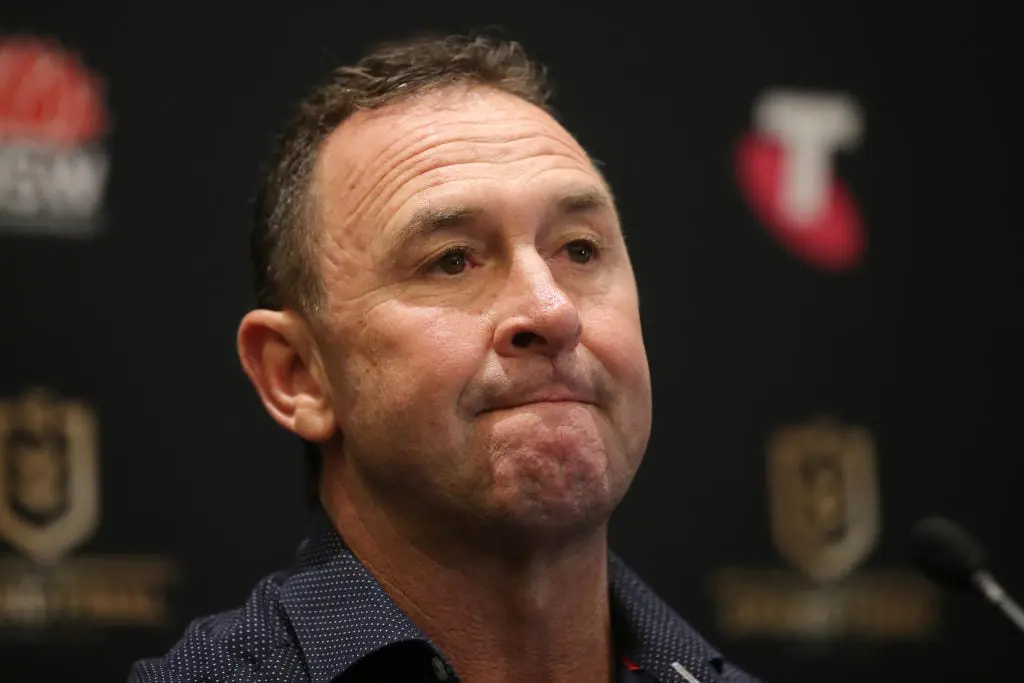
At the elite levels, a coach can expect to front at least one pre-match press conference and one post-match.
In Australia, social media, websites, the 24-hour news channels, radio and the like are hungry, thirsty and on the hunt for content and, if unlucky or unprepared, the wrong words could derail the week or even worse, the season.
Much of the media content out there can be transfer or selection speculation that a coach has to skilfully deflect.
Often the media have been prompted by the agents; a group of people that have received a reasonable percentage of the sports turnover for the last few decades and it's in their interests to drive prices up for their clients and themselves.
Agents and players have been known to tip journalists off (or make stuff up) about other clubs showing interest or how negotiations are panning out with their current club.
In the current market add in two new NRL sides and Rugby 360! It's all a game and the coaches have to play in this game too.
As long as professional rugby league exists, the players and coach will always be in demand for media and community appearances. The coach, in conjunction with other staff, has to co-ordinate the players' schedules so as to not scupper performance.
There are so many things that could come up in this category, that this could be a tale all on its own.
It really is a minefield all this and a lot for the coach to deal with. Another reason why picking coaches based on their perceived tactical nous is absolutely ludicrous.
The main thing I always say to people about being a head coach is that, if you're truly invested, you live and breathe the team and its fortunes every waking minute.
You're thinking about all of the above, and more, most, if not, all of the time. It's extremely hard to switch off. If the pressure torch is applied due to defeats, then this can be even more intense.
The skills and abilities required to be a head coach are numerous and varied.
It's a lot more than just being good tactically.
An awful lot more.
Lee Addison is a former club coach at Sea Eagles and Panthers and the founder of rugbyleaguecoach.com.au. His recently published book ‘Rugby League Coach' is available now on Amazon and www.rugbyleaguecoach.com.au
Get set for the footy with the FREE Zero Tackle 2026 NRL Season Guide! Packed with 130+ pages of player profiles, team previews, insights and analysis, the 2026 NRL Season Guide is built for fans who want the full picture. Download your free Season Guide HERE.