Connor Watson is used to the noise that surrounds him in the NRL — contract talk, team changes, the scrutiny of every game. But last week in Coonamble, a small rural town in western New South Wales, he was somewhere far removed from all of that.
Alongside his brother Fletcher, Connor co-founded the Cultural Choice Association from their family business, Cultural Choice.
The non-profit started in 2017 after a family tragedy.
“We started the association back in 2017 after we lost our cousin Parker,” Connor told Zero Tackle.
“We sort of looked into statistics of youth suicide, and after losing our cousin Parker, we wanted to try and do something about it.”
Connor, who serves as president of the Association, explained their mission.
“In our early days, our mission was to assist in the prevention of Indigenous youth suicide and then bring awareness to it. I feel like we've done a good job of bringing awareness to it over the past 10 years," he said.
“I've also been really lucky being in, you know, the position I am in as a rugby league player, that the program, it's got good coverage, and people have been able to see it and being, you know, made more aware of the issue.”
Last Wednesday, the brothers brought their mission to Coonamble for a community day aimed at connecting young people to culture, sport, and mental health support. Watson was joined by fellow Roosters teammate Mark Nawaqanitawase, Dally M NRLW star Olivia Kernick, and Sharks NRLW hooker Quincy Dodd.
More than 300 children from two local schools attended, participating in footy drills, cultural lessons from local Elders, an art station where children painted boots, and conversations with local health services. JD Sports donated boots and clothing to kit out the kids.
“It was about bringing something to a community that was starving for it,” Fletcher said.
“It was really nice, on Wednesday morning I went out to one of the cafes my aunty works at, and all the local fans were walking around in their Roosters jerseys.
“Sometimes you get so caught up in the mundane of life and the 9-5, you don't really get the chance to understand and see the impact this has on the kids and the community.”
“It's one of those things where you have a smile on your face the whole day.”
Connor echoed his brother's sentiments.
“I feel when you leave something like that, you feel really energised,” Connor shared.
“Although it was only a day, due to the Easter long weekend and having training on Thursday, it was still amazing. It would have been even better to be able to spend a little bit more time out there.
“You go out there and think about the impact it will have on people and the community, but also it has a big impact on yourself.”
Connor also highlighted the importance of players' involvement.
“I just know how good Mark is with kids, and he is such a good guy. When we were thinking who we could bring out, he just jumped out at us. He is someone who is just able to go out and do anything, and I know it means a lot to everyone,” Connor shared.
At the heart of the event — and the Association's work — are cultural connections through painting and sport. It all began when Connor's father dot-painted his boots for the Indigenous Round. Knights teammate Aidan Guerra, who himself isn't Indigenous, asked if he could get his boots painted too. That small act grew into a program where at-risk Indigenous youth paint boots for NRL players to wear on game day.
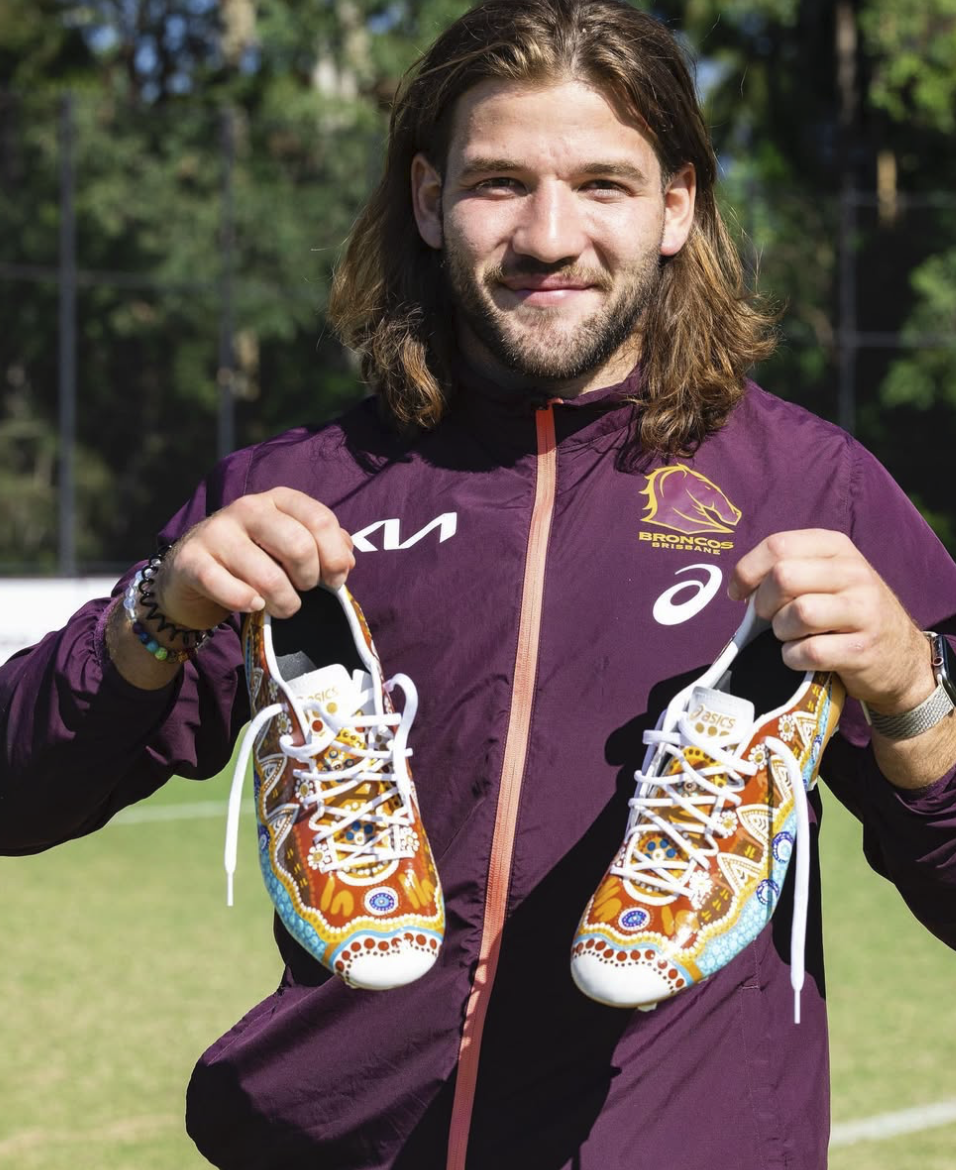
“It grew really organically,” Fletcher said.
“It started just started as Aidan asking my dad to paint his boots, then it became this idea of Art Therapy and allowing these kids to paint their story on the boots.
“We encourage them to put their own identity onto the boot, and also the player's identity too.”
Connor also spoke on the impact of going to juvenile detention centres.
“For a while there, we were working a lot with juvenile detention centres,” Connor shared.
“Getting feedback from case managers when we visit the juvies and how much, you know, these kids that have been sort of closed off and shy and how they have been able to like actually open up because of the way we use the boots, we use the painting, the art as like a vehicle to drive some of those conversations.”
“It's, you know, sort of doing that physical thing, you're relaxed, you're learning more about your culture, and you sort of feel like you're in a comfortable place where you can actually have conversations that you don't usually want to have with people.”
The Boots for Brighter Futures initiative has now been taken up by multiple NRL clubs, including the Roosters, Knights, Tigers, Eels, Broncos, Bulldogs, Warriors, Manly, Storm, and Raiders.
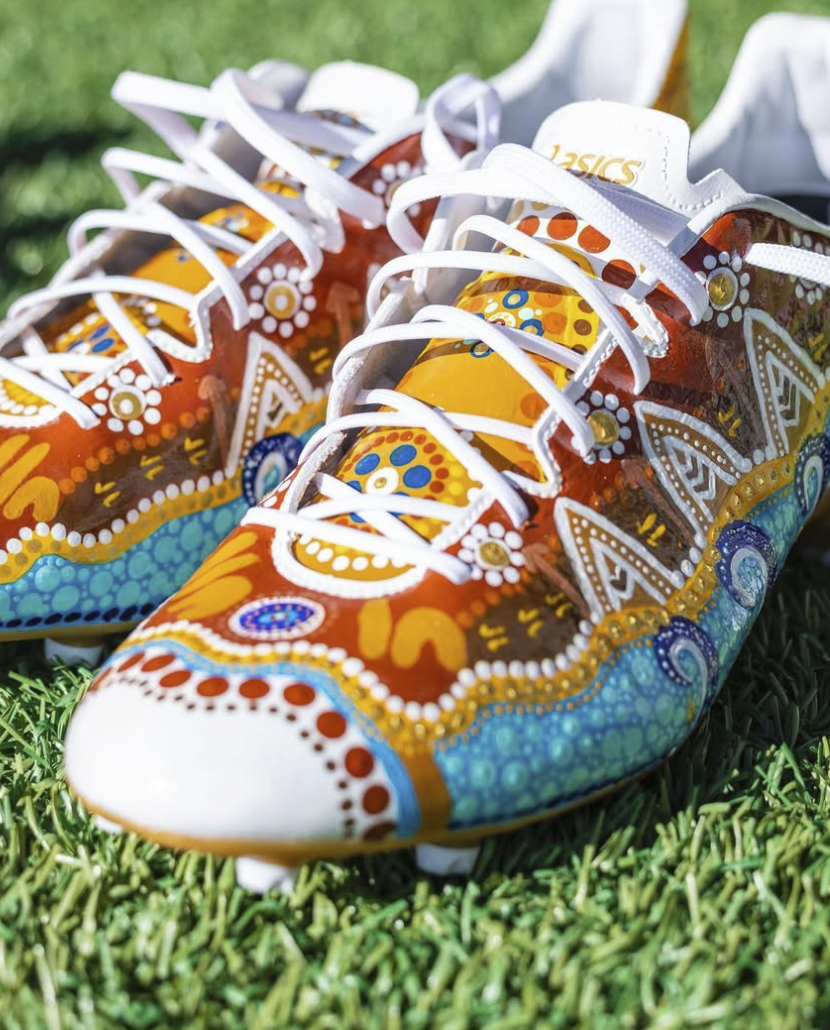
With Connor also playing for the Sydney Roosters, the tri-colours have been able to host excursions where children visit facilities, present the boots to players, and talk about their designs. Weeks later, they can watch their boots in action on the field.
“It's pretty amazing for these kids where they get to turn the TV on, and you get to see James Tedesco running around in the boots that you have painted,” Fletcher said.
The program has expanded into a six-week Brighter Futures initiative, which combines art therapy, cultural lessons, and mental health awareness. Elders are involved to guide students through history and identity, creating a safe space for conversations that might not happen elsewhere.
For Connor, the connection between sport, culture, and community runs deep. A Gamilaroi man, he emphasised the importance of Indigenous identity.
“It's very important. It's an identity thing. When you know who you are as a person and what you are connected to, it's powerful. It's very powerful,” he said.
“That's why I like playing Indigenous All Stars. The last couple of years, it's been so good for me in filling my cup, making me strong in my identity and using it as a good way to set me up for the year.”
He also shared his appreciation for the Indigenous All Stars game and how it is a key fixture in the rugby league calendar.
“Yeah, 100%,” he said on how he would like to see the competition grow and flourish.
“Some guys have talked about having it at the back end of the year. Even if it's a part of getting teams ready for the Pacific Champs, that would be really cool.”
“It definitely served a purpose. For us playing in it, every year it's been a really tough game, with a really good level of competition, and that's also why I have wanted to play in it. I have wanted to start the year with an intense game, and I just absolutely loved it.”
From a father painting boots for his sons' boots to at-risk Indigenous youth children painting their own stories, Cultural Choice Association has become a platform for connection, culture, and awareness — and a quiet but powerful way for rugby league players to make a difference on the field.