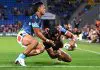
This Saturday will see the long-awaited debut of Daly Cherry-Evans in the tri-colours, with Trent Robinson giving fans a first look at what's to come in the final pre-season trial against the Parramatta Eels.
Although the representative halfback brings elite experience, the question continues to loom: how will he fit into the Roosters' spine without creating chaos?
Is this a case of too many chefs in the kitchen?
Daly Cherry-Evans' high-profile move from the Northern Beaches has sparked questions about how he will fit into the Roosters' spine, particularly as the number six next to halfback Sam Walker.
Traditionally, strong halves combinations feature a chief playmaker at seven and a running five-eighth. Although DCE has spent the past 14 years wearing seven at Manly, he sometimes integrates five-eighth tendencies into his game—allowing space for “eyes-up footy” and reacting to what he sees.
However, in recent seasons this hasn't always been smooth. Right-side winger Jason Saab sometimes looked unsure of DCE's next move, and while three-man cut-outs or chips over defenders can spark moments, they may not suit the Roosters' structured attack.
The problem lies in DCE essentially fitting the same mould as Walker: a playmaker who runs and shapes the game. DCE is a game manager, experienced in kicking into corners and guiding his side through his boot, but there are questions about how he will perform on the left side, having only worn six a handful of times internationally.
DCE's direct style, where he dominates ball-handling and kicking, may also clash with skipper James Tedesco, who thrives as a third playmaking option. With multiple players seeking the ball and trying to create opportunistic plays, the halves pairing risks looking like ‘headless chooks' if roles aren't clearly defined.
A great example of this dynamic is the Luke Brooks–Mitchell Moses combination in 2016, before the duo was split up. Both were strong running playmakers capable of electrifying moments, but at times they got in each other's way and appeared directionless on the park.
Roosters hierarchy under the microscope
The Roosters are trusting that DCE's experience delivers direction rather than disruption. The representative playmaker has the composure and game awareness to choose his moments, but this remains Sam Walker's side to steer. The hierarchy must be unmistakable.
Former Roosters playmaker Luke Keary summed it up on Triple M:
“The seven is the leader of the team. Daly's come in, but Sam needs to elevate the team.”
If Walker does not own the team, the balance tips immediately.
Although the broader spine dynamic adds intrigue, it also tests adaptability. Despite his recent injury, Reece Robson brings stability—a solid, no-frills operator who will provide excellent service to his halves. If the Roosters had a dummy half whose strength was running, such as Brandon Smith, the spine might struggle to gel in the limited time DCE has left in his career.
The Roosters' spine this season is a test of adaptability. Can DCE adjust to a supporting role, or will his instinct to control the game take over? The answer won't come from set plays or stats but from the split-second decisions that shape great half combinations.
Ultimately, the question for this Saturday and the Roosters' 2026 season as a whole is clear: Will DCE be the missing piece to the Roosters' premiership puzzle, or a high-stakes gamble from Robinson to force a fit before time runs out?
Get set for the footy with the FREE Zero Tackle 2026 NRL Season Guide! Packed with 130+ pages of player profiles, team previews, insights and analysis, the 2026 NRL Season Guide is built for fans who want the full picture. Download your free Season Guide HERE.