Queensland have been the dominant football state in the 21st century when measuring it by the ultimate test of strength; Origin.
Starting in 2001, Queensland have won 16 series and New South Wales 8. So twice as many wins for the Maroons.
When the Blues won the series 3-0 in the year 2000, that made the score nine series each. Things were so tight between the states that there had even been a drawn series in 1999.
Indeed, things were still rather tight for the three years after that, with each team winning a title each, before a second draw in 2002.
For the next three years, we all wondered where the next Queensland win was coming from as New South Wales won in 2003, 2004 and 2005.
An Andrew Johns masterclass is what we remember the 2005 series for, but maybe just as crucial was the introduction of Cameron Smith and Jonathan Thurston to a side that had previously included Billy Slater; but out on a wing rather than the fullback position that he would become famous for from that year, onwards.
From that game, which took place on Wednesday 6th July 2005, the series score between the two is stark viewing for those of a Blue persuasion.
It's Queensland 15, New South Wales 5.
In the twenty years since that event, the Blues have been in a constant search for the new ‘Joey' Johns.
Nathan Cleary's recent struggles in the famous Blue number seven jersey are only the latest in a string of failed anointments.
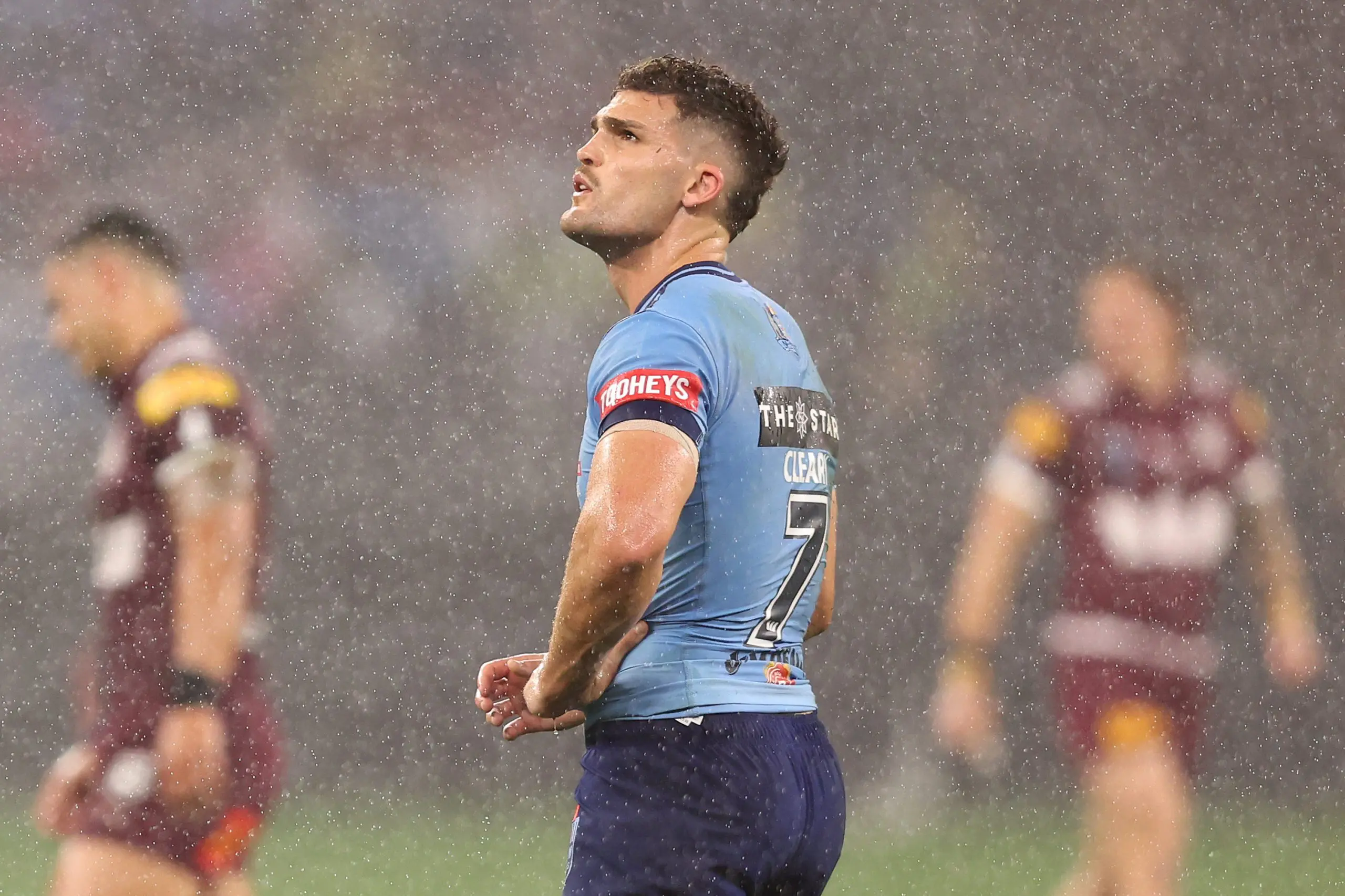
The still strongly Sydney centric rugby league media, on a constant search for storylines and star creation in an ever-changing mainstream television, newspaper and radio landscape, have been on a seemingly constant mission to coronate a new King.
Ask Brett Finch, Craig Gower, Jarrod Mullen, Brett Kimmorley, Peter Wallace, Mitchell Pearce, Trent Hodkinson and Adam Reynolds what that pressure can be like.
Indeed, they once wanted to hand Luke Brooks the crown! But unlike Pearce, Wallace et all, he was never used, replaced and in some cases, used again as the State selectors tried to find a working formula.
As it happens, I arrived in Sydney to work as a coach at two NRL clubs and a teacher in schools in 2007, so I was very much part of the development process that were happening in many places before heading North of the Border several years later.
To understand the current state of play in Origin, we need to understand the youth development that has occurred in each state since the turn of the century, and, I have had a ringside seat for lots of it!
Coaching down in Sydney was quite a ‘political' experience. From the minute my plane touched down in my first season there, I was exposed to conversations about which kids were getting picked out of nepotism and favouritism rather than merit. And the same accusations were applied when it came to representative coaching positions for the adults.
And that was just in Manly Warringah – traditionally one of the ‘smaller' breeding grounds for Sydney footy.
Heading out to Western Sydney to coach and to an area like Penrith was an even further eye opener.
To put this in some kind of context, Penrith back then had 24 junior clubs, Manly operated with half that amount.
The politics and favouritism shown in Penrith made Manly's look like a playground argument in comparison. And somewhere in between those two areas you have several others such as St George, Parramatta, Canterbury and the like who sit in between. So, you get some kind of idea of what it is like being a junior player or coach in that kind of environment.
Then, on top of all that, throw in the powerful school's circuit.
Schoolboy rugby league in Australia is a big fish. It's very hard for a ‘non teacher' to coach in the school's system so the vast majority of coaching jobs in the school network are taken by school teachers and therefore, by default a lot of ‘non teachers' go for the representative jobs in the junior club regions, coaching the Development Squads and the Junior Representative squads in the prestigious Harold Matthews and SG Ball competitions.
With all this competition for coaching jobs, there is something of a ‘dog eat dog' attitude when it comes to acquiring them. Whereas there is something of a distinction between the talent and qualifications needed to coach these various squads, this distinction doesn't really apply to the juniors themselves.
Some of the players you see running around in the NRL now were regulars in both the school system and the Junior Rep pathways because the Junior Rep squads are run by NRL clubs, some kids were and are being asked to do four training sessions a week in the evenings.
Throw an elite school into the mix and the training session count goes through the roof.
The powers that be in the state have made every attempt to minimise the impact on these kids, with the junior representative season running from February to May and the school season from May to August and September, yet the reality is, the coaches of all teams, all want to win.
Inevitably, they squeeze as much as they can out of their players. The players don't want to let them down or lose their spot and therefore end up serving two masters (three if they still play lots of club football, too).
Back to the coaches and, particularly when it comes to junior representative teams, they only have a short window of time in which to impress their bosses, namely the Development Managers and Recruitment Managers of the NRL club.
Also, the Development and Recruitment Managers have to impress their paymasters, as they want to see good juniors coming through and there's no surer short-term sign of that, than a Junior Rep team that wins.
As a result, coaches tend to coach with short term goals in mind. Holistic long-term approaches to player's development, unless communicated well by the club, tend to be hit and miss. This collision of philosophies and goals was in full swing during the mid-noughties onwards.
This influenced some of the thought process when New South Wales were suffering their long-term drought in the Origin arena to the champion Maroons team including Thurston, Smith, Slater and the like.
It was thought that the Blue state was churning out too many ‘robotic' players with a reduced amount of instinctive skill, thanks to a playing journey perpetuated by being mentored by ‘career coaches' and being run into the ground on the training field.
To watch Johnathan Thurston at his peak was to see a player who still gave the impression he was just having fun in the park. Seeing Cooper Cronk was to see a well-coached, but ‘manufactured half' thanks to his coach at Melbourne Storm; yet he wasn't hamstrung by too many previous bad habits or pre-programmed ideas from his time growing up in Queensland.
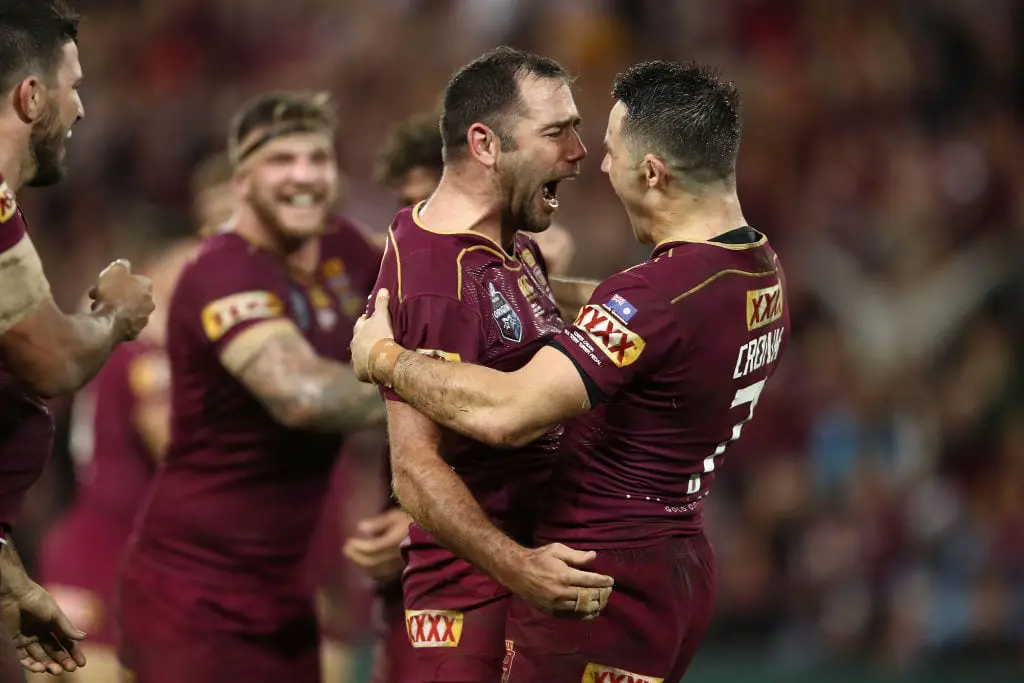
When, in 2012, I arrived in the Sunshine State to coach, I could see that free spirit still in flow amongst juniors. The junior players up there produced skills I had rarely seen, particularly from further up North, or Country areas and their coaches weren't as over-bearing.
Around about the same time, clubs were in the early throes of starting their own Junior Rep programs similar to those in Sydney and there was an ever-growing powerful Schoolboy circuit.
Now, the Cyril Connell (Under 17) and Mal Meninga (under 19) Junior Rep competitions are well entrenched and Queensland Schools have supplied the vast majority of the most recent National Schoolboy champions over the last decade.
Junior Rep teams in Queensland train still a lot less than their equivalents in Sydney and the coaching stocks seem to have mentors who are far-less obsessed with anything other than helping kids in their care.
Schoolboy ‘Langer Trophy' rugby league in South East Queensland is absolutely the toughest Under 18s football I have ever seen and coached in.
Up in North Queensland, schools such as Kirwan, often produce teams that beat everyone South of their location on occasion, too.
In recent years, you'd have to wonder where the Blues would be without the Trbojevic family, James Tedesco's move from the Tigers to the Roosters and the contribution of Penrith Panthers; whose long- term investment in juniors saw them feature in the last five NRL Grand Finals, winning four of them.
After their eight-straight series wins, Queensland also won three of the next four, making the post 2006 score 11-1 to the Maroons.
Brad Fittler introduced two Penrith development products, Nathan Cleary and Reagan Campbell-Gillard, to the winning Blues side in 2018, which already featured future captains Jake Trbojevic and the new Rooster Tedesco.
In 2019, Jake's brother Tom joined the winning party and a huge win in Game 2 across the other side of the country made everyone sit up and take notice.
Another Penrith product and future captain of New South Wales, Isaah Yeo, made his first two Origin appearances from the bench in 2020, and was joined a year later by teammates Brian To'o, Jerome Luai, Liam Martin and Apisai Korosiau as they lifted the shield for the third time in four years.
Talk of a Blue Dynasty actually started then, by the way!
The addition of two other Panthers, Stephen Crichton in 2021 and Spencer Leniu in 2022, couldn't stop back-to back Queensland titles in ‘22 and ‘23, but the addition of another, Dylan Edwards and coach Michael Maguire, could and did, in 2024.
And let's not forget Matt Burton, who debuted in 2022 for both New South Wales and the Bulldogs, despite being a Penrith junior development player!
The Trbojevic brothers, Tedesco and Penrith development products have accounted for 34 per cent of the state's selections since 2018, and 43 per cent of them since 2021.
It's not only in terms of players that New South Wales seem to have a development problem. Where were all the coaching options when Laurie Daley was called up for a second stint for this year?
Since he left the job the first time in 2017, labelled negatively as a losing coach, inexperienced clip-board carrier-cum-television and radio star Brad Fittler was appointed, and then Daley again, bookending the one appointment of a ‘real' coach who brought victory; that of Michael Maguire in 2024.
Their reluctance to use a club coach has meant that a whole raft of experienced coaches cannot be considered for the New South Wales Head Coach job, yet it's a rule that doesn't count when it comes to assistants.
And Queensland didn't seem to care about that tule when they asked Wayne Bennett to coach the ‘Worst side in Origin history' to victory in 2020!
The reality now is that Queensland are once again, the Origin champions and they have been that a lot more than New South Wales.
The score is 27 to 15 and, for that to change, things have to change. With more human resources and footy resources in general at their disposal, this shouldn't be happening and ought to be a real wake-up call for those who run the show down at NSWRL at Sydney Olympic Park.
They need a statewide, holistic approach to youth and coach development.
A long-term plan.