As we count down to the deciding State of Origin match at Accor Stadium on Wednesday, it's important to highlight that the fever and passion for this series is not confined to the shores of Australia.
Sporting franchises, whilst established within city limits, are not precluded from casting their dreamlike spells over fans globally, evidenced by the adoration that exists for Premier League, NFL and NBA teams throughout the world.
International sport generally lacks the same reach or appeal, as people are locked, via their bloodlines, into supporting the country or state of their birth.
A curious exception to this practice is the State of Origin series that captures Australia's sporting consciousness every year. The tribalised boundaries of New South Wales and Queensland seem to transcend the need to be born into that location, and nowhere else is the state against state battle celebrated than across the ditch in New Zealand.
People are mad for Origin in the Shaky Isles, and like in Australia, a stark divide exists between the Blues and Maroons fans.
For me, growing up in a rusted-on rugby league family in the 1980s was a time when we were not privy to regular Australian rugby league on television.
Apart from a live Winfield Cup Grand final once a year via our local league clubs' satellite connection, we were restricted to a sporadic supply of months-old highlights packages from the regular cup rounds.
But even with this threadbare exposure, the McNeil family developed into rabid fans and quickly found our teams to support. This love of the Australian competition extended seamlessly into a love of State of Origin football.
Initially, the Origin games were only broadcast on our national radio carrier, 1ZB, so we would sit listening to our transistor radio, transfixed, by the iconic calls of Thirsty Morrow depicting the exploits of Wally Lewis, Alfie Langer, Blocker Roach and Michael O'Connor. At our tender ages, halftime meant bedtime for me and my brothers.

However, I would sneak a wireless radio under my pillow and listen to the muffled crescendos of the matches, marvelling at the temerity of last-minute tries and sideline conversions.
Eventually, the boffins at TVNZ cottoned on to a growing demand for live Origin broadcasts, so it brokered a rights deal to show the three-match series live on national TV, and the support for the series promptly exploded.
It's no revelation that New Zealand is, and has forever been, a rugby country.
Growing up playing league you were always in the minority, always sniggered at for being the outsider, for only playing for six tackles at a time, for being a crappy kicker of the ball. But when Origin came around, for those five weeks, you were transformed into the popular kid, your knowledge of the game and ability to explain the rules highly prized, and I walked a few inches taller.
Watching those initial live TV broadcasts was like straight-lining a heavy narcotic to mine and my brothers' eyes, the salty language, the technical league vernacular from the commentators, the player interviews, the rolling thunder of the crowd, the fireworks and smoke-filled fields. The gladiators themselves, who turned into superheroes before our eyes. The anger, the biff, no one was immune to the expectation of sanctioned violence.
And therein lies a major reason for New Zealand's adoption of Australian rugby league tribalism.
There was nothing more glamorous than an Origin production. The rugby broadcasts of the time were vanilla, a ‘she'll be right, mate', low-key experience for the ‘she'll be right, mate' nation.
Glitz and pizzazz were not part of the rugby fabric that continued to be enamoured with its amateur status. So, there was a gap in the sporting market to mirror the big budget Hollywood blockbusters that were now ever present in the cinemas of Aotearoa.
In my household, you counted down the days to Origin.
We planned our evenings around the broadcast, homework and chores completed in double quick time after the celebratory lamb roast dinner. Choosing the right snacks and drinks were important, as was the bowl of ice cream at halftime. Then there were the arguments during the game itself.
Sometimes you couldn't sleep for hours after the final whistle, so swept up and emotionally engaged in something we had no real reason to be attached to.
So, who do the Kiwis support in this battle? You would think that a country of neutrals would, in theory, yield a 50-50 split between the two sides, right? Wrong.
Within New Zealand's shores, there is an overwhelming support for Queensland, something that has often confused me.
My family of five were split 3-2 in favour of the Blues, so it seemed natural people would adopt a fair split when supporting the two teams.
The background to our allegiance was determined by years of scouring through those Rugby League Week and Big League magazines. We followed our favourite club players into the Origin arena and supported the teams they played for, think Greg Alexander, Benny Elias, Mal Meninga and Wally Lewis.
But every new fan of Origin I met forever selected Queensland as their team. Why?
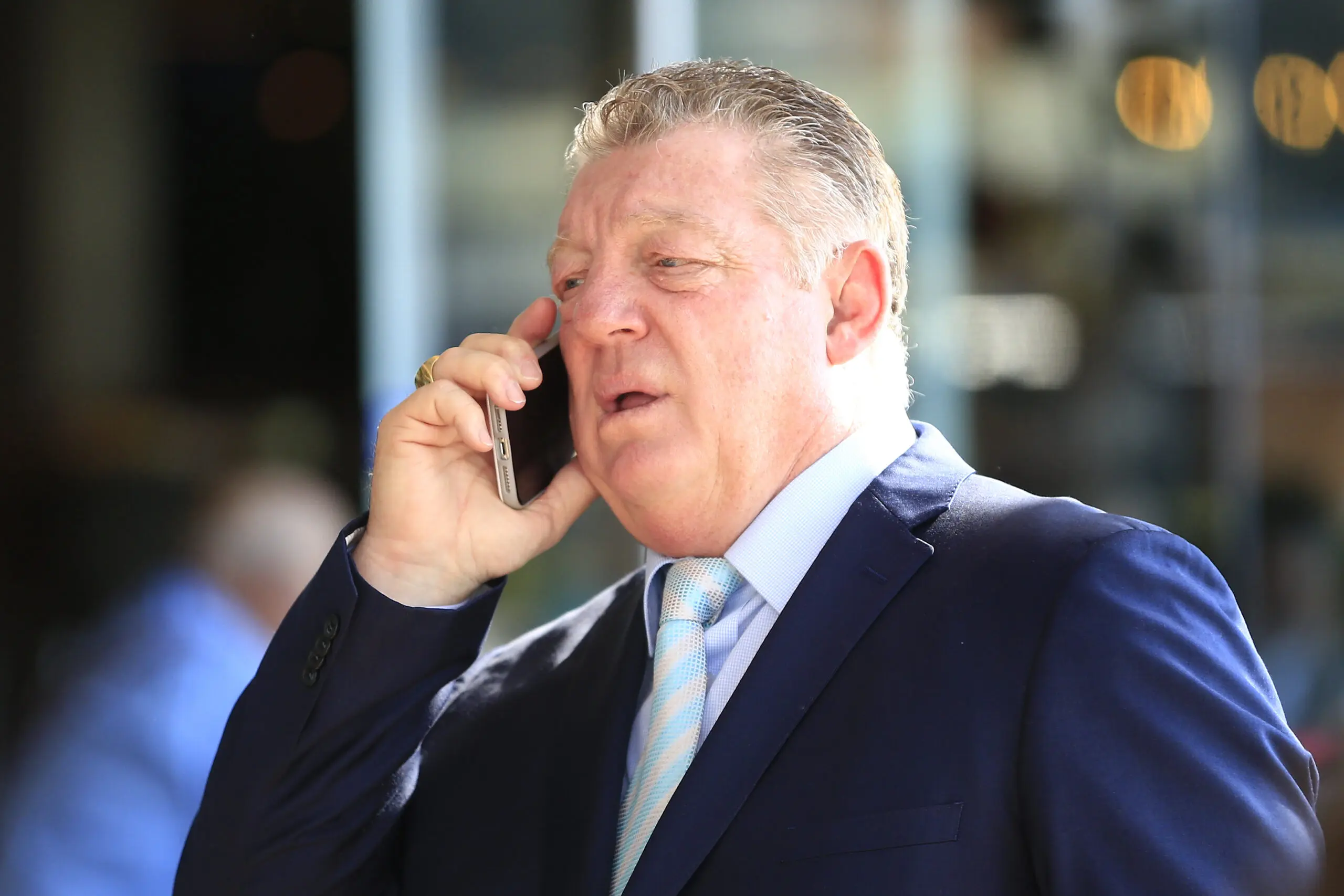
Some of this, I think, had to do with the dominance of Queensland through the eighties, but during the latter part of the nineties, when Phil Gould had redressed the balance of series wins, the Maroons still dominated in the Kiwi supporters' ranks.
In my high school, I used to run a book ($2 a pick) on the Origin winner and the margin of their victory, and almost all wagered their tuck shop money on Queensland, especially those who had no clue about the merits of either side that year.
Naive and devoted to the Blues as I was, I neglected another driver for Queensland support within New Zealand, that of the appointment of Graham Lowe as the Queensland coach for the 1991 and 1992 series.
He remains to this day the only foreign coach to lead a side in the hallowed contest. The appointment in itself seems absurd today, as it was then. A Kiwi coaching State of Origin?
Following the series loss in 1990, Arthur Beetson was removed as Queensland coach, and in his place was hired a man who cut his teeth coaching on the mean fields of Otahuhu.
The team in 1991 was a mix of old and young, and the QRL saw Lowe as an innovative coach capable of heralding in the younger generation. Coupled with his unique foreign status, Lowe can also lay claim to being the architect of the eponymous “Queenslander” call.
Billy Moore's famous outburst, delivered as he stalked down the tunnel in Game 1, was in effect Lowe's idea. In training, he had created a call of 'tempo' for the team to lift during certain periods of the game.
Yet on the eve of the match, when the players were getting ready to embark in to battle, Wally Lewis stood up before the team and said the call ‘tempo' was to be replaced, the cry would now be “Queenslander, because that's who we are and who we play for.' A nation of Kiwis signed up to support Lowe and his Maroons.
In hindsight, Lowe was a perfect fit for Queensland; he has been an underdog for much of his career, even when guiding glamour clubs like Wigan and Manly.
And in truth, the underdog status that Queensland carry into every game is another key reason for their adoption by the New Zealand public at large.
We love a blue-collar underdog, and despite all Australian rugby league players coming from a lower strata of socioeconomic background, the Blues are forever painted as the 'Mr Fancy Pants' of the series, something Kiwis are want to hate.
Lowe, Lewis and Queensland won that series in 1991, where the coach further endeared himself to his players by squaring up to Mark Geyer at halftime in game 2 after MG had tried to kill anything that moved. Lowe later battled health issues but still suited up to coach in 1992, only to lose to the burgeoning Gould revolution. But the love of Queensland was firmly cemented in the nation's psyche.
Twenty-three years later, Queensland are somehow still underdogs, even after leading the head-to-head Origin series 24-17 (including a winning streak of eight years).
As we head into the deciding match of the 2025 series, without doubt, my countrymen will be pulling for the Maroons to win another one.
Everyone except for a few Blues die-hards, including me, my brother and my Mum.
Go the Blues, stick it to those cane toads.